

First published March 2016.
After bankrupting the motor company he started, André Citroën could no longer afford to spend summers in Deauville. For years he had rented one of the largest villas, the Villa Abeilles ‘villa bees’ for the season, gambling away small fortunes at the casino with the Aga Khan and Jean Patou, breaking away occasionally to be photographed with his delightful wife. Unfortunately developing the Traction Avant automobile ruined André’s bank balance and his health. He lost Citroën to the main creditor Michelin in 1934 and died after a short illness in 1935.
In Deauville the party carried on without him and without a backward glance. By 1936 rich summer visitors were looking forward to a new extravaganza to distract them from the troubles of the world. It would pass right by André’s summer home.
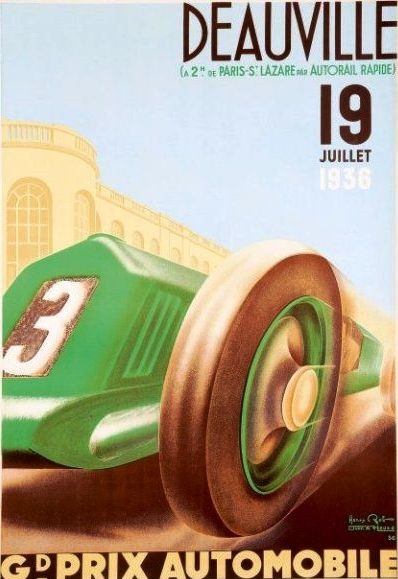
The automobile Grand Prix was coming to Deauville.
Rise of motor racing
During the 1920’s and 30’s the dangerous, glamorous new sport of motor racing was wildly popular. Drivers were heroes and towns that hosted their battles made fortunes from the fans. Deauville was an expert at entertaining it’s wealthy visitors – rumours are the race track was built before the church – so looked to exploit this new entertainment.
Bringing automotive Grand Prix to Deauville
The team that brought the idea to Deauville were Marcel Letarouilly a shop owner in the town, André Misonnier who owned a decorating business and was a friend of driver Philippe Etancelin and Armand Esders a rich industrialist and government advisor. Armand was well known for his collection of rich man’s toys; he owned a Rolls-Royce, a Hispano-Suiza biplane and a Bugatti Royale that infamously had no headlights as he refused to drive at night. Andre had bankrolled the local aerodrome and was friends with Ettore Bugatti, who often visited the town.
This dream team of investors created a non profit making Association to run the event. They soon secured sponsorship from Le Matin newspaper.
The first Deauville automotive Grand Prix would take place on 19 July 1936.
Imperfect plans
A track was drawn up along Boulevard Eugène Cornuché in front of the grandest villas then back along the seafront. The organisers contracted Entreprises Morneau to upgrade the road surface to a budget of FF95,200. Intense discussions took place across the town as agreements to close roads, host advertising and place fencing around the track were negotiated to everyone’s advantage. The French Ministry of the Interior to the Calvados Region sent detailed instructions on how to run the event and a fee of FF20,000 was put aside for policing (FF3000 payable in advance).

The race would start at the marina end of Boulevard Eugène Cornuché, in front of grand villas with Trouville in the background. Racers would first drive past the casino along a road then fairly straight, but now altered to curve around the park. They would then come to the first of two sharp corners before another straight back to the marina, alongside Le Planches, the boardwalk next to the beach. The circuit covered 2.4 miles.
As the Grand Prix approached race teams took over all the garages in Deauville. They were granted two days of practise between 7am and 8pm then on the third day took part in a two hour qualifying session between 3pm and 5pm.
Demand for allocated race tickets was fierce but not everyone was pleased about the new Grand Prix. At the Normandy Hotel a guest checked out early, annoyed by the sound of the cars during practise prompting a strong complaint to the Association from the manager.

A swarm of bees
By race day Deauville was packed ‘as if invaded by a swarm of bees’ said a local paper. A large wooden fence was constructed around the track, not for safety but to keep out non-paying spectators. Fake tickets were printed and sold, swelling the crowds around the track to uncomfortable levels.
As they surveyed the new circuit both drivers and spectators expressed their dismay. The roads were unusually narrow for a Grand Prix, and the sharp corners that looked potentially lethal.
The drivers
The Association were delighted to have secure top names in racing. Motor Sport magazine later reported:
“A good entry had been received, two Ferrari Alfa-Romeos, to be handled by Farina and Dreyfus, Wimillie’s Bugatti, Lehoux’s 2-litre E.R.A., Chambost’s, McEvoy’s, cholmondeley-Tapper’s and Raph’s Maseratis, and Alfa-Romeos entered by Charles Martin, Sommer, Austin Dobson and de Villapadierna. The officials decided that r’s brakes were not up to their work, and he was refused permission to start.”

French favourite Marcel Lehoux
The race begins

Motor Sport review of the race, August 1936

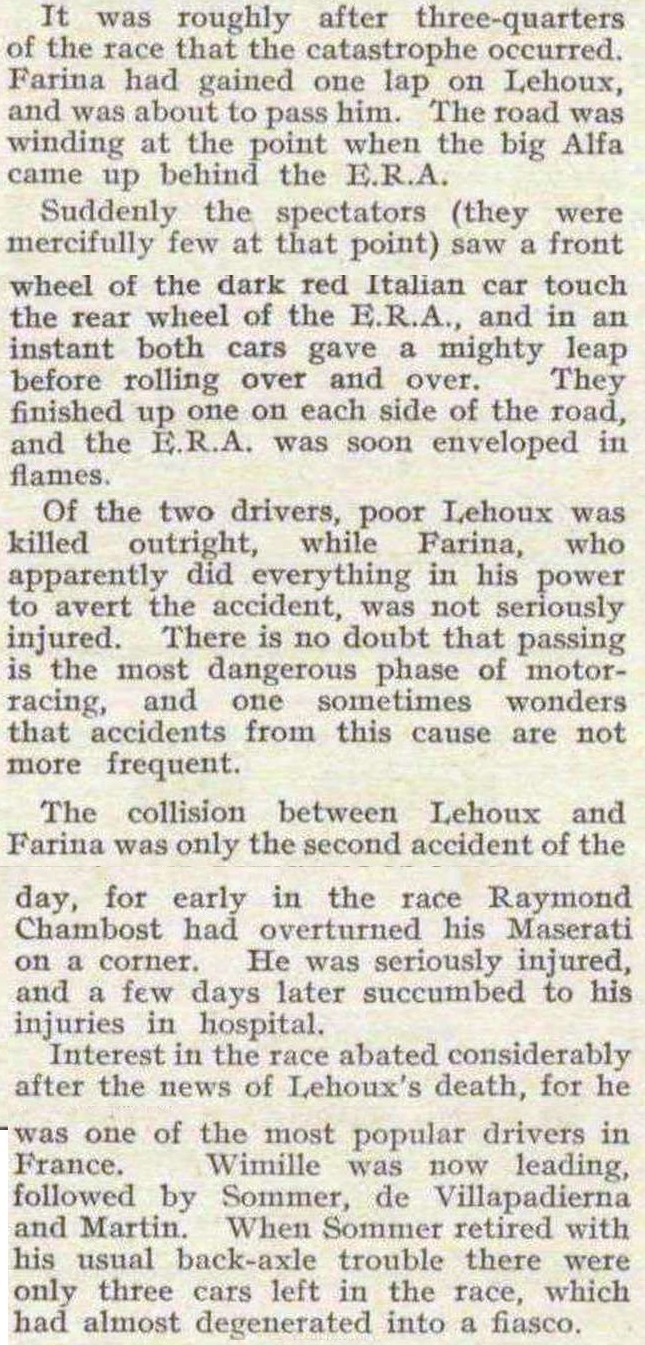
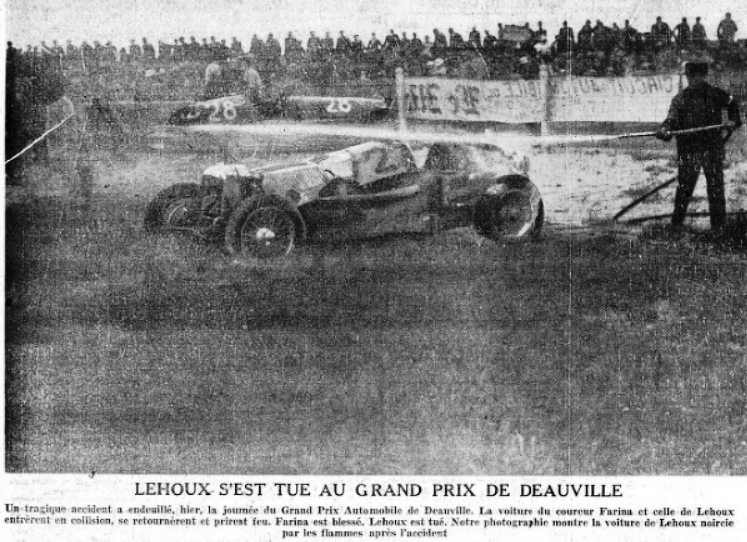
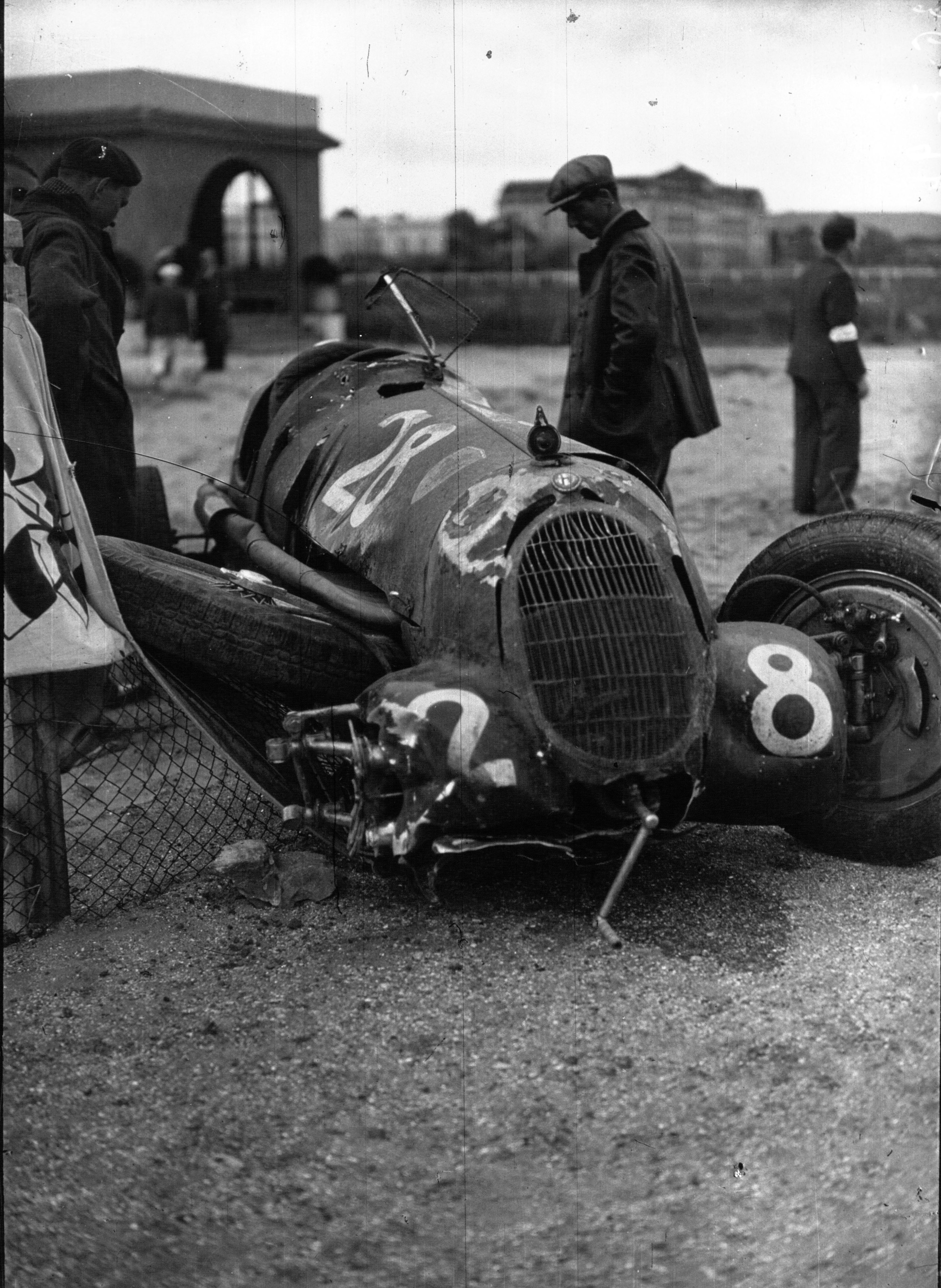
Then…catastrophe
Motor Sport review of the race, August 1936
Race results
Broken down race cars, crash victims and their wreckage were dragged from the track so the race could continue. Only three cars completed the 100 lap race.
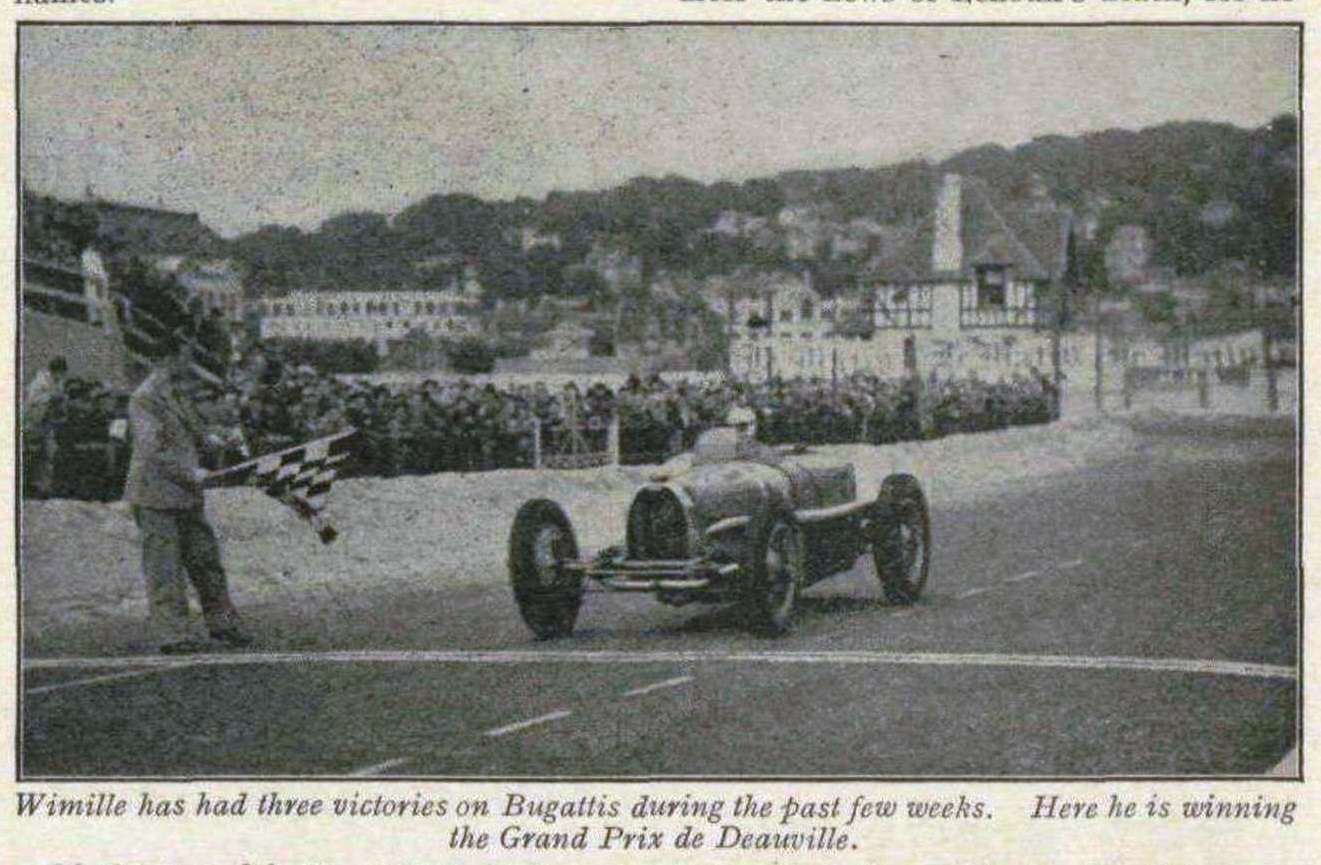
- Jean-Pierre Wimille in the Bugatti T59 3.3 engine in 2hrs 57mins and 44s. Speed 77.73 mph.
- Charles Martin in an Alfa Romeo Tipo B 2.9 engine in 2hrs 59mins and 11.6s. Speed 76.89 mph.
- José de Villapierna in an Alfa Romeo Tipo B 2.9 engine in 2hrs 59mins and 47.6s. He also took the fastest lap in 1m38.8s.
Raymond Sommer’s Alpha Romeo Tipo B rear axle broke (again). Guiseppe Farina crashed the Alpha Romeo 8C1935. Robert Benoist crashed the Bugatti T59. Rene Dreyfus’s supercharger on the Alfa Romeo 8C failed. Marcel Lehoux fatally crashed the ERA B. and Raymond Chambost fatally crashed a Maseratie BCM spl.
The Deauville track would never be raced again.
Rumours and the end for Deauville’s Grand Prix
Jean-Pierre Wimille collected his trophy to muted applause. Rumours were already spreading through the crowds that one of their heroes had not survived his crash and another was seriously injured.
Local shop keepers engineered traffic jams to keep people in the town but there was little appetite for celebration. The promoters were left with a FF200,000 loss.
Forgotten heroes
On 26 October 1937 a ceremony was held in Deauville to commemorate the lives of Marcel Lehoux and Albert ‘Raymond’ Chambost. Shortly afterwards a bronze sculpture of the two drivers, paid for by Journal l’Aero, was placed on the edge of town along Boulevard du Mer. It is no longer there.
The Deauville automobile Grand Prix of 1936 was rarely ever mentioned again.

The bronze plate is still there. But it is in a remote corner and a few people pay attention to it.