

This article was first published February 25, 2017.
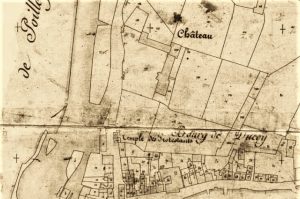
If you drove through Ducey a little over thirty years ago, the only memorable sight would be an abandoned distillery decaying on the corner of Rue du Gén Leclerc. Observant travellers may have noticed a high roof behind the crumbling buildings, but most people would have looked away.
Ducey knew a jewel was hiding behind the old Mabit & Jardin distillery. The remains of five hundred years of history standing proud, if a little déshabillé; the château des Montgommery. A château with a rare secret.
So how did it become obscured by the old distillery? More importantly, how did the little town of Ducey save this unique piece of history?

Restoring disgraced family fortunes
The original château was built by Gabriel II of Montgommery. Gabriel was the successful third son of the infamous Gabriel I comte de Montgommery.
Gabriel I accidentally killed the king of France in a joust, became a protestant and after many battles was executed by order of Catherine de Medici, the dead king’s wife. Before his execution in 1574, Gabriel I was legally deprived of his lands and titles. Unrepentant he famously stated “tell my children, if they are not able to reclaim their position, I curse them from the grave!” (you can read more about Gabriel I’s life in this post).
Gabriel I would have been proud of his third son, Gabriel II.
Gabriel takes Mont Saint Michel
Gabriel II’s early life during the religious wars was one of many battles and included an attempt to take Mont Saint Michel. Rather than just attacking this ancient fortress, Gabriel with his Huguenot compatriots waited until the governor was away. Then a small group of men dressed as women (or pilgrims, depending on which version you read) sashayed up to the Mont and spoke softly to the sentinels. Once the doors were unlocked they butchered the frankly useless guards and called to the 200 soldiers waiting just along the causeway. Gabriel held the Mont for a few glorious days before an extremely irritated Louis De la Moriciere lord of Vicques, the catholic governor, returned with a lot of men and booted them out. Some straight over the ramparts.
A château for a 16th century hero
By the end of the 16th century kings had changed and Gabriel II had fought enough on the side of the right people to be rich and well respected. He decided to build a château at Ducey, on land that that once belonged to his grandmother. Gabriel died age 75 in 1635, before his grand home was completed.
Gabriel left behind many children and most of a very large château. The original design was for a large pavilion, with two wings creating a U shape facing the river. Building work seems to have stopped with Gabriel’s death and just one wing was completed.
Bills and taxes
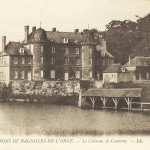
The château’s fortunes changed dramatically over the years until in the 19th century the owner decided to pull down large sections of the building, rather than keep them repaired or pay the tax they incurred. In 1864 the now separate wing was sold off, and a low wall and hedge put up between the two properties.
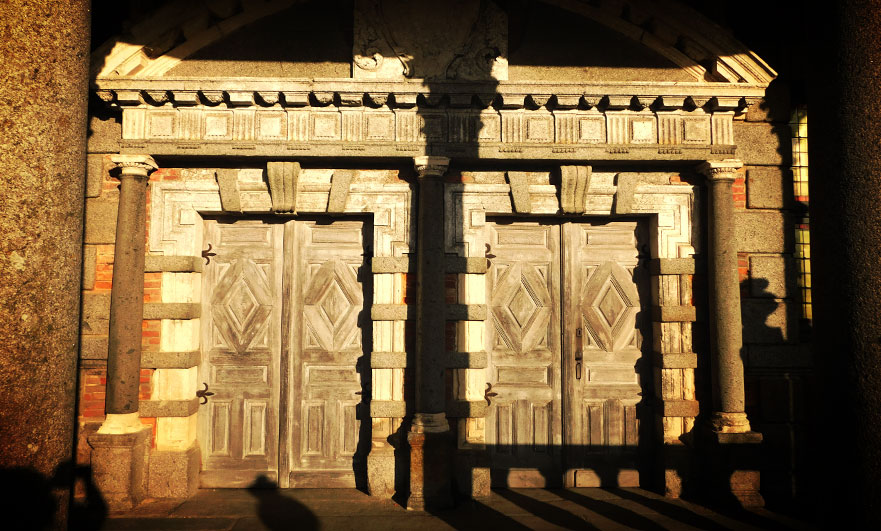
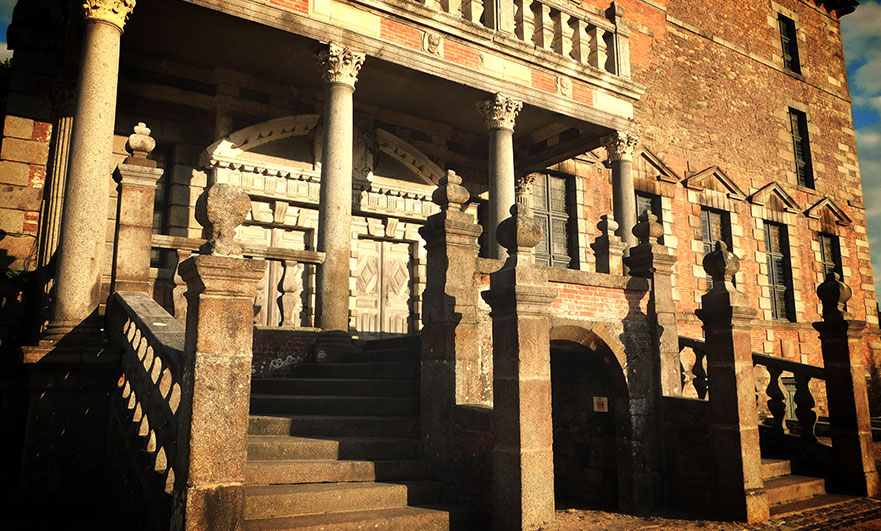
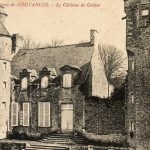
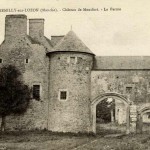
While some owners tore down, others worked hard to restore. Old pictures show windows filled in, reshaped and reinstated. In the early 20th century a small roof above the entrance (see above in our original postcard) was removed under the watchful eye of Gabriel Ruprich-Robert, chief architect of historical monuments, and a small terrace restored, with the balustrade we see today.
Ducey tries to buy the château
By 1920 the château was up for sale again and the town hoped to buy it, but the little agricultural town could not afford the price demanded.
Mabit & Jardin could. They liked the position of the land, near good roads and the river and the old château would do for offices.
So on 2 February 1922 a distillery moved in to Ducey.

Prosperity
The town’s disappointment was tempered by having a very successful business that offered a lot of employment and bought everyone’s apples. For forty years the distillery la Société Mabit & Jardin was a symbol of prosperity. As the business grew, the old chateau become more obscured by factory buildings.
Concerned for the future of the chateau, Ducey successfully registered it as a ‘historical monument’ on 20 January 1923.

End of an era
In 1959 laws around alcohol production tightened. By the late 1960’s Jardin & Mabit were in trouble. Then in 1968 the distillery was closed and put up for sale with the old château .

Very carefully the town thought how to buy the land and château . Sadly the cost of demolishing the old factory and restoring the château , on top of the sale price, was too much.
The people of Ducey were forced to watch grimly as the distillery became an industrial eyesore and the château slowly declined.


Determined Ducey
But as no-one came forward to buy, the town started making plans. It took them twenty years but on 1 October 1984 Ducey formally registered their interest to buy the land and château. It was a complicated purchase finally completed in 1986.
After securing the ancient building, on 16 November 1987 demolition of the factory started and in the following year, excavations of the old moat.
Between 1989 and 1991 renovation focused on saving the roof and chimneys. In 1992, working with ‘monuments historiques’, the façade was bravely reconstructed to a design based on old drawings.

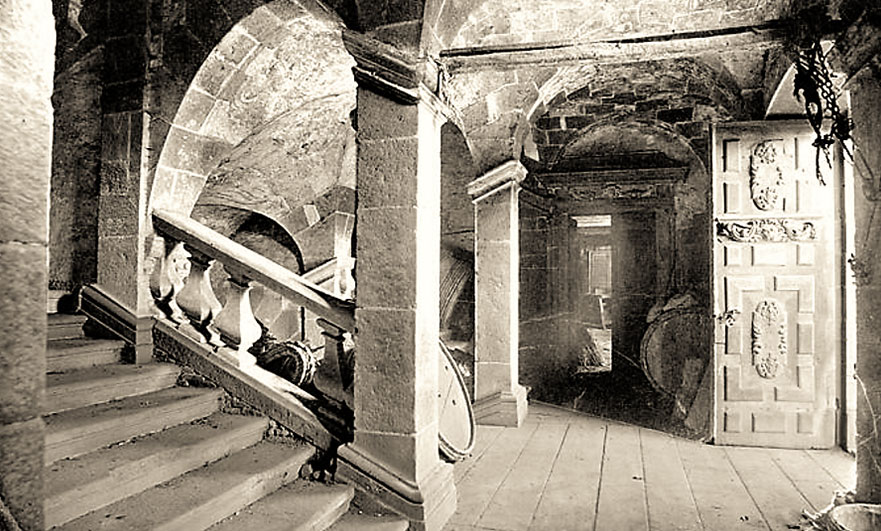
Slowly what could be saved was saved, what could be remade, was; parquet floors restored, limestone balusters of the staircase mended, doors, windows, walls… at every stage the work considered history and refused to deny a difficult past.
A treasure sympathetically restored
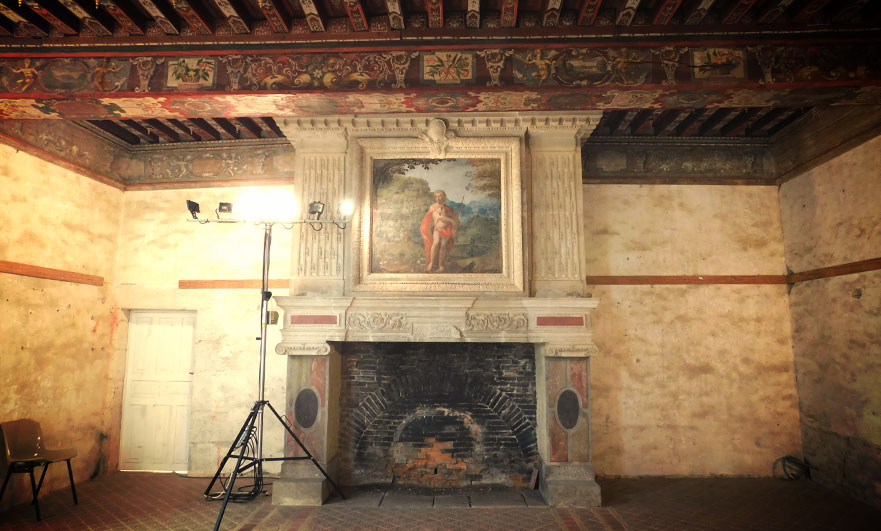
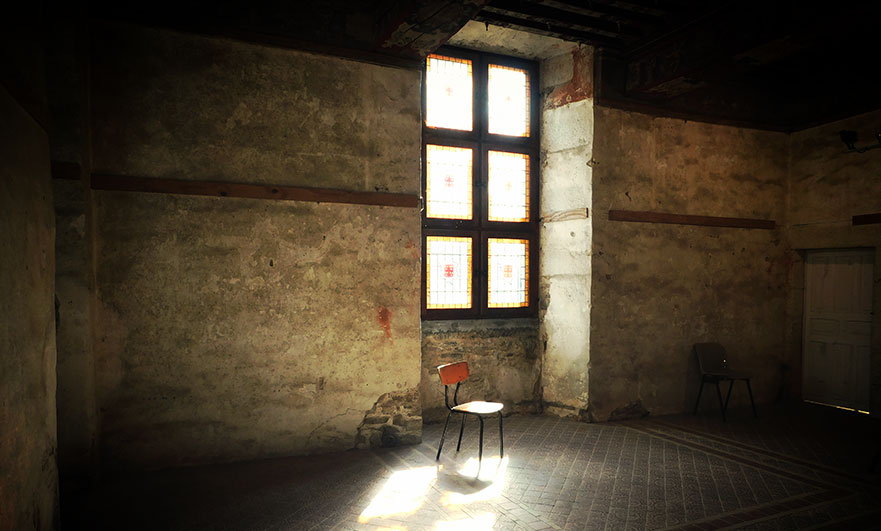
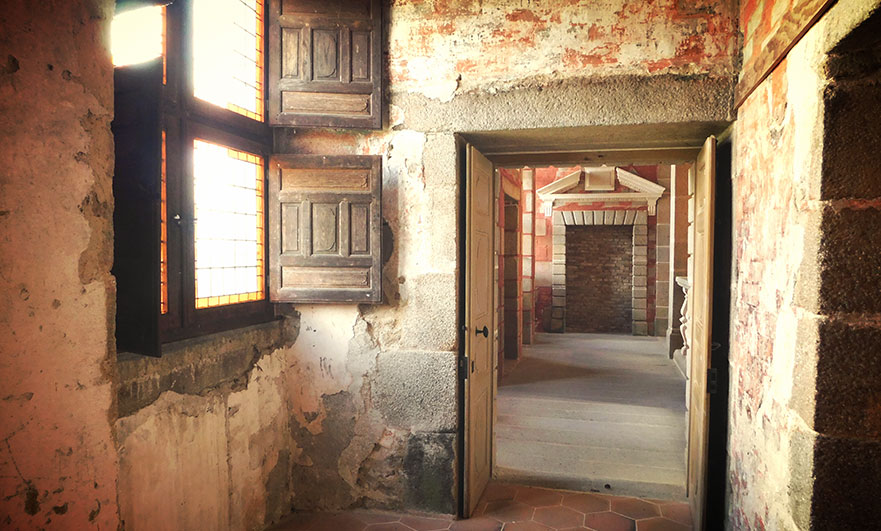
The result is a building that is strong, not textbook perfect, but very beautiful. The bones of the building are in some places visible, but so are it’s lines; the tall windows lighting perfectly proportioned spaces, battered fireplaces speaking of warmth and a time when these rooms hummed with talk and life.
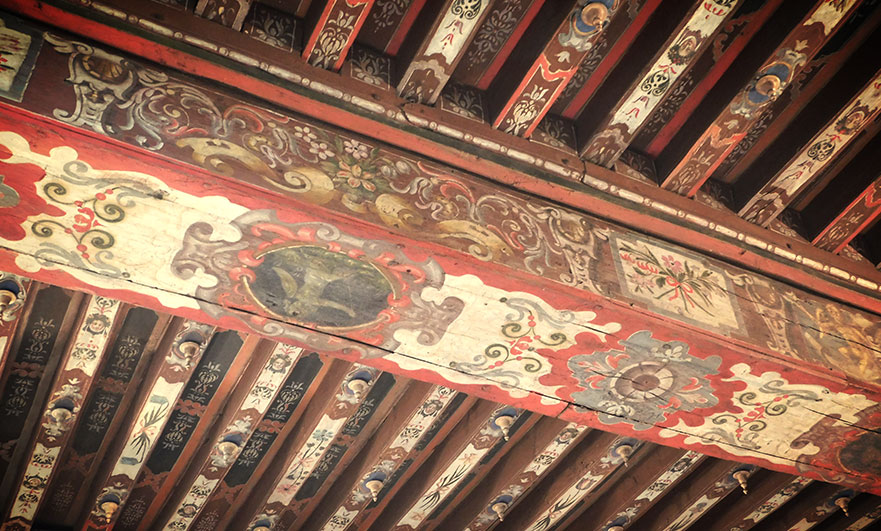
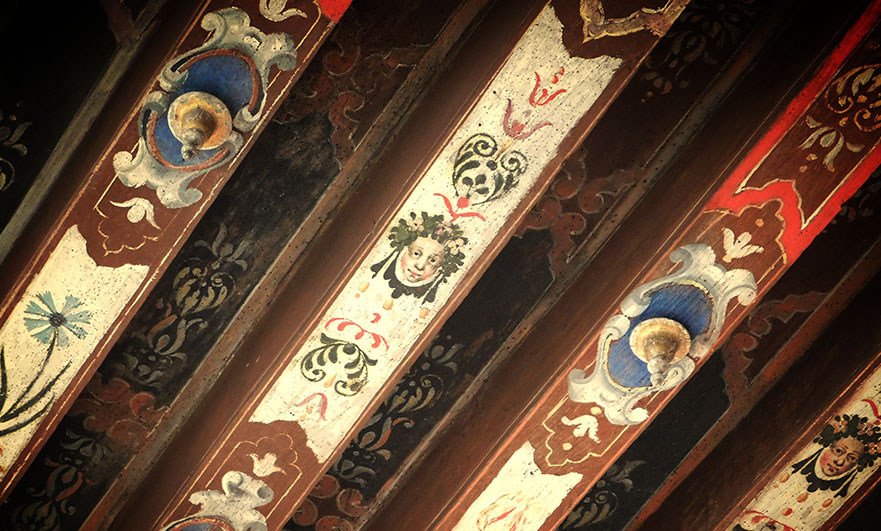
It’s secret? You may have spotted this sturdy old building is home to some very rare and outstanding painted ceilings.

Our visit
The tourist info team were absolutely charming when we visited the château during the September heritage days. They guided us to their current art exhibition which featured in this photo post.
The tourist info office is based in the old wing. In 2011 the town was able to buy the wing and cheerfully tore down the hedge that separated it from the main château. After considerable restoration it was opened in May 2016.

Your visit
The château is open for guided tours (about an hour) in July and August on Tuesdays, Thursdays and Saturdays, setting off at 3pm from the tourist office. The château is also open for the heritage weekend in September. Groups can arrange visits across the year.
If you are nearby in May, try and visit during ‘Pierres en Lumières’ to see the château by candlelight. This charming festival lights up heritage for one night, across Normandy. Contact the tourist office as reservations are essential.
Thank you!
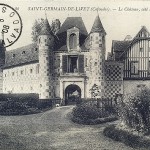
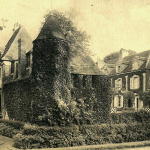
We are very grateful to the tourist information office for kindly letting us use their photos of the old distillery.
Visit the Ducey tourist information website.


Discover 16th century battler Gabriel Montgomery in our post ‘The heroic end of Gabriel, comte de Montgomery, in Domfront’





I am a Ducy, descended from catholic Ducey’s that emigrated to England, then Ireland, then the U.S. I found the post very interesting. Have never visited, but my mother and grandfather Ducy (a modification by his grandfather due to an unknown discussion with his brothers) did. Will put on my to do list!
I was delighted to find this site while searching for info on Gabriel, Comte de Montgomery. Gabriel is a 16th great grandfather in one of my maternal family lines. I accidently found this site at the bottom of a Wikipedia article on Gabriel. I have numerous ancestors from the Normandy area and I found your site so interesting I am subscribing to you news letter. Thank you for giving me more information on GGF Gabriel.
Thank You! Very pleased to have been of help.
We’ve driven through Ducey and passed this lovely garden many times. We were always on our way somewhere else, like Mont St. Michel. Next time we go we will stop here. what an interesting history. Thanks for this post.
Very interesting article.
You will soon be able to produce tourist circular route maps for us. I’m sure there will be a market.
Keep it up.
Thanks John! That is an interesting idea…