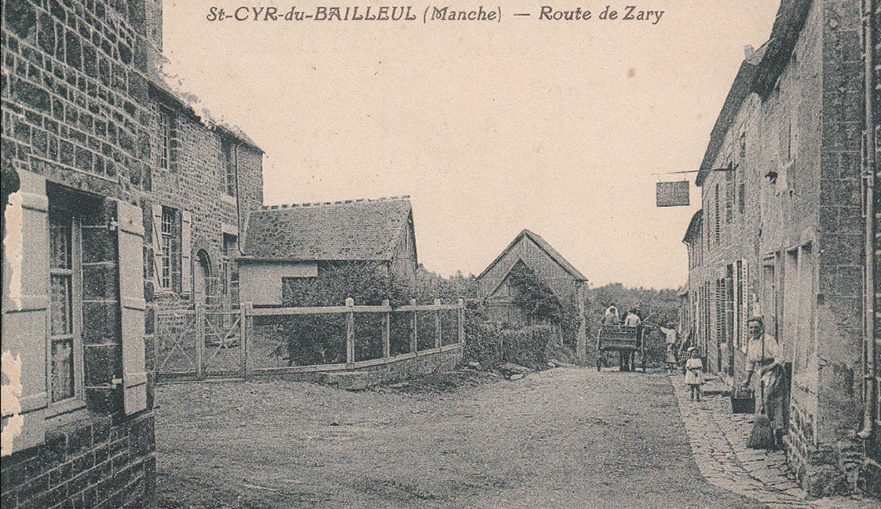
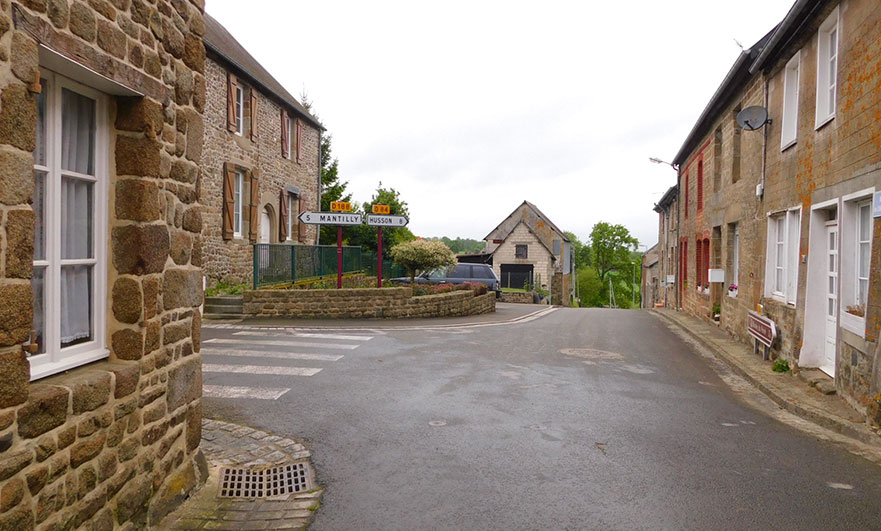
In the south of Normandy, deep in the countryside near the border with Mayenne, is a tiny village called St-Cyr-de-Bailleul. Here a few hundred souls live around a small unremarkable church. History has little to report here as perhaps it takes a lot to rouse these hard-working country folk from their farms and cider making. But in 1906 they were roused, to battle. It went something like this.
A dull sounding law
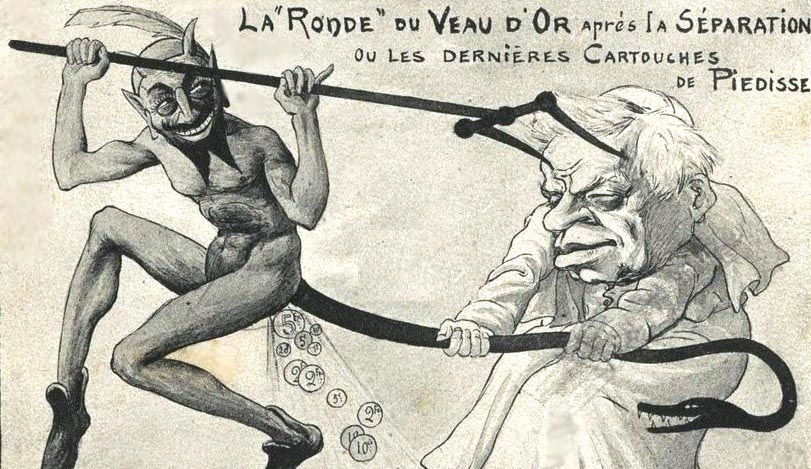
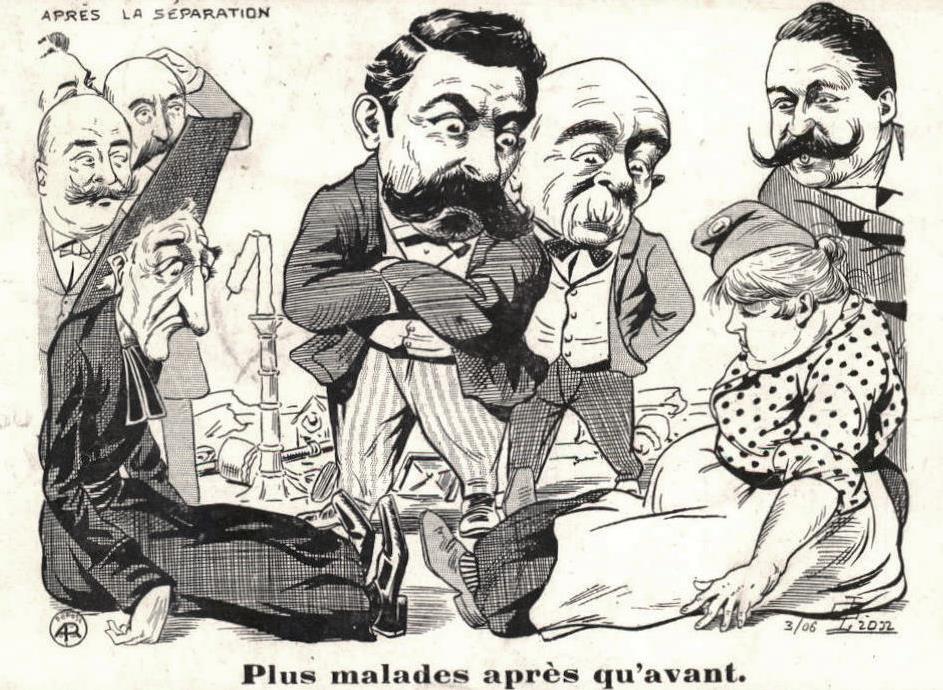
After years of lobbying, months of preparation and hours of discussion, a law was passed on 9 December 1905, officially separating the Catholic Church and the French State: loi du 9 décembre 1905 concernant la séparation des Églises et de l’État.
For centuries Catholicism had been the legal religion of France; supported with funds, protected and enmeshed with government in ways that many were finding uncomfortable.
It started with the French revolution
The Revolution in 1789 had encouraged religious freedom stating in Article Ten of the 1789 Declaration of the Rights of Man and Citizen: “No one may be disturbed on account of his opinions, even religious ones, as long as the manifestation of such opinions does not interfere with the established Law and Order.”
This was followed in 1795 by a brief legal untangling of Church and State, but Napoleon reinstated it in 1801. He also agreed to fund various religious groups to make up for the revolutionaries’ confiscation of church property.
With the 1905 law, not only would this funding end but all church buildings would come under ownership of the State, unless religious groups set up ‘worship associations’ and agreed to abide by a strict set of regulations.
A furious Pope and rebellious priests
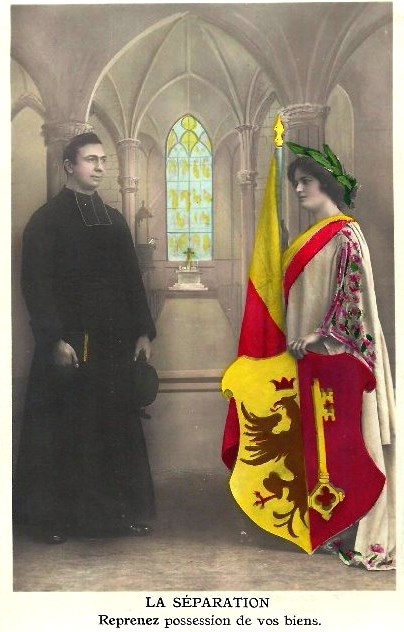
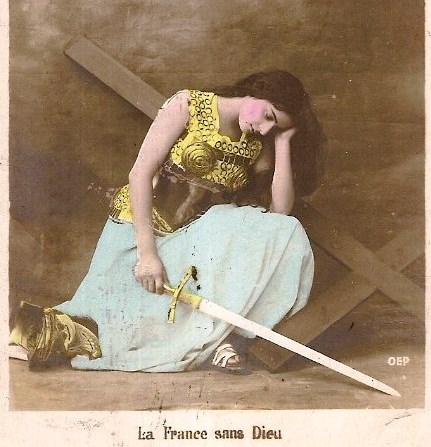
Pope Pius X was furious. Loudly condemning the law he told Catholics not to create the associations. Catholics across France were in shock and priests whipped up their communities in to a rebellious frenzy. What sort of country would France be without the Catholic Church at its centre?
The French government, having given itself a huge property portfolio, was keen discover just how much this windfall was worth. A detailed audit of church property was announced; not only buildings but furniture and ornaments… the Catholic Church was horrified
L’Inventaire
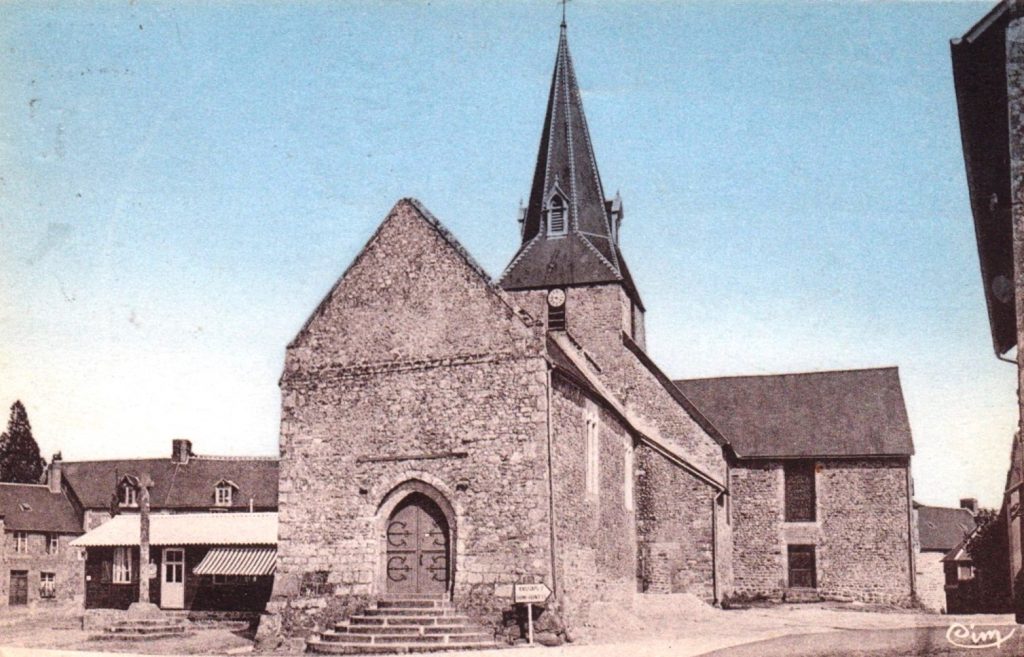
In the Manche, tiny St-Cyr-de-Bailleul looked to its church in dismay. A community of just a few hundred people, this ancient building and all it stood for was the centre of their world. Every child was baptised here, marriages celebrated and the dead carefully sent on their way to a better place. Conversely the government was a distant, expensive source of paperwork, wars and tax demands.
To hand over their beloved church to paper pushers skulking far away from the green fields of St-Cyr-de-Bailleul was unthinkable.
After many heated discussions, the village made preparations. The main church door was secured and heavily barricaded with wood and furniture from inside. Large carts were chained together against the side doors and look-outs were stationed in the church tower, scanning the horizon for government lackeys.
Of course even the quietest countryside is never as empty as it looks. In the fields and woods around the village everyone was on high alert.
The government inspector
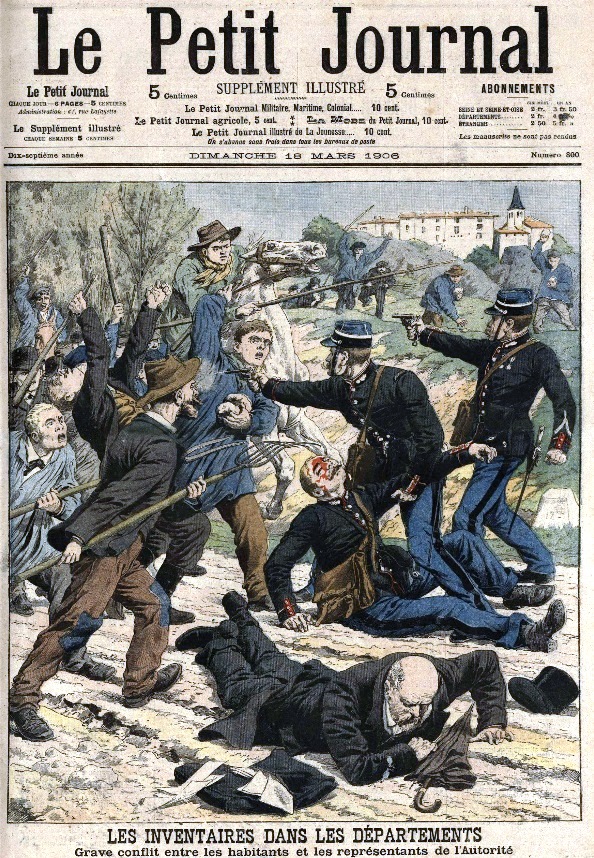
Then one day in March 1906 they saw him. A government inspector, accompanied by two policemen, on his way to St-Cyr-de-Bailleul. Word reached the village before the inspector and he arrived to find the church well-fortified and surrounded by enraged parishioners. As he tried to argue his way into the church, more people came rushing into the village.
It was not the first time the Inspector had failed to access a church in this devout region. Eyeing the barricades and the pitchfork waving locals, he decided to retreat.
St-Cyr-de-Bailleul was relieved but continued to be watchful. For some days they kept look-out. For weeks they barricaded the doors.
When months passed without reappearance of the government inspector, St-Cyr-de-Bailleul tidied away the barricades and continued their country lives in peace.
Until November.
The battle of St-Cyr-de-Bailleul
During the morning of Tuesday 20 November word reached the village that just an hour’s walk away, in Saint-Georges-de-Rouelley, the army had forced their way into the church and an inventory had taken place.
But by the time the message arrived in St-Cyr-de-Bailleul, so did a company of the 2nd Granville Infantry regiment. The church was locked but it was too late to set the barricades. Armed with whatever they could find, the villagers surrounded their church. They were no match for the armed militia. Some were braver than others and in the furore a man’s leg was broken.
Then as quickly as it started, the battle was over. A side door was forced open by soldiers and the government inspector stepped inside the old church.

November 1906
What the government inspector found was not remarkable, except to the people of St-Cyr-de-Bailleul.

And then
Many concessions to the 1905 law were put in place in the following years and the relationship between Catholic Church and State improved, although the Catholic Church would never again wield power it had before 1905. Catholic resistance to the 1905 law is also the reason many pre-1905 Catholic churches belong to their communes and French cathedrals, to the State.
In St-Cyr-de-Bailleul all is peaceful again, but don’t be taken in by this charming facade. If needed it wouldn’t take them long to rustle up some barricades…

Some sources (or, ‘things you never thought you’d ask’)
More about the 1905 French law of Separation