

As we stood on the latest Vernon bridge (there have been many) in Eure, we matched our postcard with no idea of the dramas this idyllic scene had witnessed. An online search revealed a vast library of WW2 pictures of soldiers. Then we discovered just a suggestion of a lesser known story that shocked and enthralled us. A story that had to be hidden and is still not often told.
Fighting oppression
During WW2 in Vernon they were short on food, munitions and freedom. But not on bravery.
A unintentional betrayal
The first Vernon Resistance group, known as ‘le Réseau’, were created in the first year of German oppression, 1940. Led by Primary school teacher Louise Damasse it was part of the ‘Hector’ network. ‘Hector’ was originally set up in Granville in June 1940 with the British Intelligence Service (IS) and quickly spread across Calvados, Eure and Orne. Hector’s success was short lived.
One a terrible August day in 1941 Pierre Aussannaire, a Resistance recruiter born in Vernon and completely immersed in the Normandy and Paris networks, is captured on Gare Saint-Lazare railway platform in Paris with a bag of guns. Tragically an address book is also found.

The Gestapo initiate Operation Porto and in October 1941 round up 244 people across Normandy and Paris. The ‘Hector’ network is largely destroyed. Pierre is deported to Germany, he died in terrible captivity on 4 April 1943.
In 1942 a second Vernon group ‘Résistance’ is set up by Georges André. Résistance circulate underground newspapers Résistance and Porte normande while collecting intelligence and keeping up a barrage of guerilla activities against the occupying forces.
Also in 1942 a third group ‘Vengeance’ appears, based in nearby Écos. They focus on sending information to the UK, ‘immediate action’, medical assistance and helping Allied airman. They are betrayed in the winter of 1943/4 and many arrested, but the group continues.
1944
By 1944 the Eure Resistance networks are the largest in Normandy, linking well over 1000 people. Members of the Resistance live a precarious existence, facing the the daily threat of exposure by spies and collaborators and deadly torture by the Gestapo.

But they have also had some very good news. The invasion is imminent. To strengthen their cause insurgent groups across France join together as FFI, Forces Françaises de l’
The battle for the bridges of Vernon
George’s town is under attack. The Allies are desperate to destroy the bridges at Vernon, the last crossing before Paris. The Seine offers the only natural barrier for any 3rd Reich troops attempting to get back to Germany and because of its strategic importance the town is heavily occupied.
Then on May 7 1944 American P-47 Thunderbolt pilots, dive bombing to dangerously low heights, destroy the railway bridge over the Seine at Vernon. But the main bridge that could carry thousands of troops and vehicles is only slightly damaged.
Refugees in the cliffs
After this partial success, further bombing was all from high altitude. From April to August 34 air attacks fail to destroy the bridge. Many Vernonnais become refugees as stray bombs battered the town and the death toll grows. Dozens of families are forced to set up home in the caves, old quarry workings, across the river.
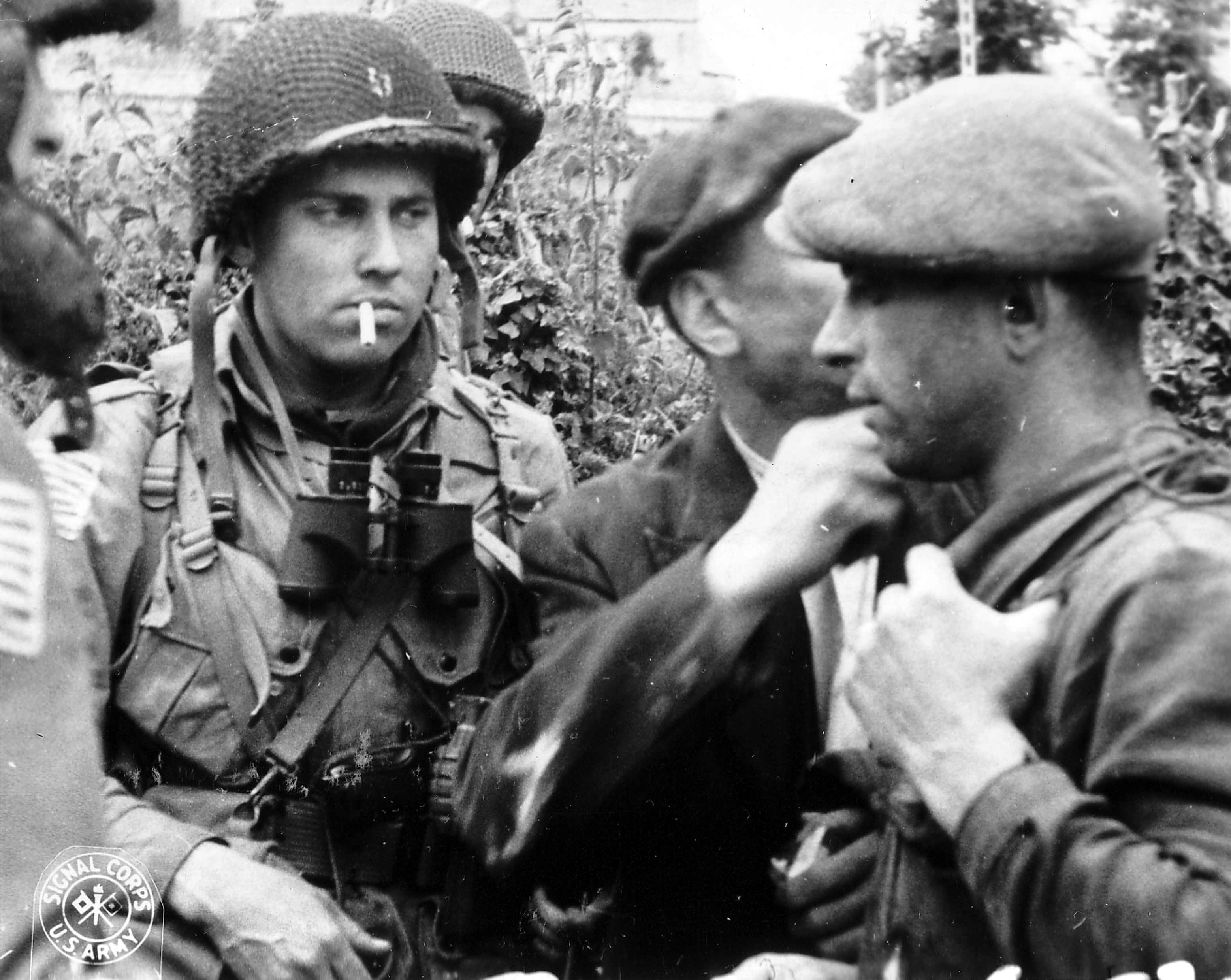
June 1944 and news of the D-Day landings is marked by increased violence and oppression by the occupying forces but in spite of the danger of reprisals over 100 airmen are rescued by the Eure FFI.
As the air attacks continue the Resistance fighters of Vernon know they have to act before the town is completely destroyed. The Allied forces are avancing and the bridge’s importance to the both sides grows daily. Fernand Caffiaux, Georges André and his son Stephen, Marquet, Leroux and Le Meur plan an act of suicidal bravery.
Bodies in the Seine
They agree the attack should take place in daylight as it will be least expected.
On Friday 18 August Marquest rows two friends under the bridge over the Seine. Desperately avoiding the attention of the guards Léon Le Meur and Francis Leroux quickly attach to the bridge all the explosives they have been able to gather.
Speeding silently away they are back by the town when they hear the explosion. A flash of light, dust and debris everywhere and a huge wave of water confirm their success. German bodies float along the Seine.
They quickly learn that although badly damaged the bridge is just about passable on foot. Still people of the town are ecstatic.
‘Make themselves safe’ but without the Americans
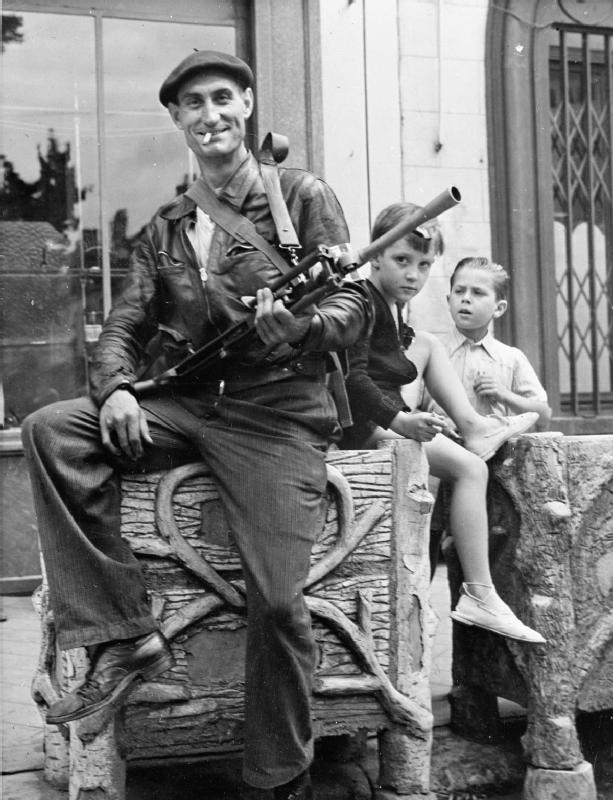
August 19. A sighting across the plains and a rumour spreads across Vernon; the Americans have arrived! Encouraged by the audacious attack on the bridge and the sight of the Allies, Resistance groups mobilise their sections and set about ridding the streets of Vernon of their hated invaders.
Leaders Caffiaux and André speed out to meet the Americans and quickly learn from Colonel Regnier that their optimism has been misplaced. The 5th Regiment will not be stopping at Vernon, their orders are to travel only to Louviers. Vernon must wait for the British Army.
Caffiaux and André explain they have already taken the artillery barracks, the park, the Château de Saint-Just and released Sainte Marcel and Sainte Pierre d’Autils. They are advised to ‘make themselves safe’ and await the English. It should only be a day or two. The Colonel thoughtfully leaves them a liaison officer, M. Lavoie.
The town that liberated itself
Back in Vernon forty FFI fighters attack three German tanks and two trucks at the town hall. Finally after delivering a hail of shells the tanks turn tail and leave Vernon. There is an intense battle along Rue Carnot. FFI reinforcements arrive and the famously elegant tree lined Rue des Capucins becomes a battle ground. Several SS are injured, the others surrender.
Just across the river German troops hold the village of Vernonnet and the hill. They continue to fire on Vernon but the FFI are unwilling to respond, only too aware of the vulnerable townsfolk in the caves.
Francis Leroux, posted amongst the rubble of buildings on Rue d’Albufera overlooking the remains of the bridge, spots infantry quietly attempting to cross. FFI ammunition is dwindling. He gathers FFI forces and they wait until the group are near then open fire. Grenades complete their task and few survivors cling to the shore. For now no-one will be attempting to cross the bridge.
It is August 21 1944 and Vernon is free.
Flag of freedom
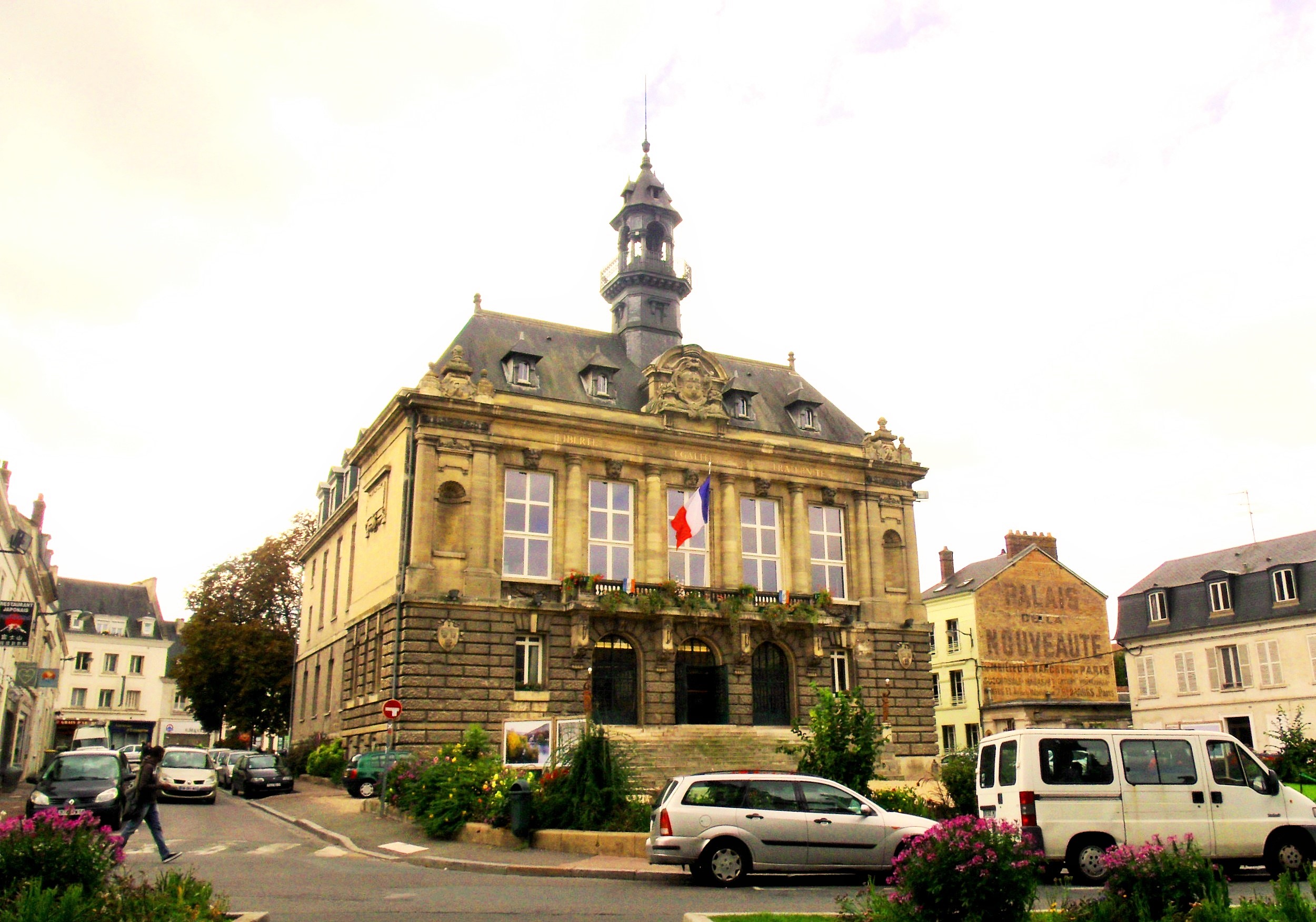
On 22 August the FFI dismiss the town council that took its orders from the hated Vichy government and for the first time in 4 years the French flag flies over the town.
A dangerous waiting game
For five days the free people of Vernon watched as in the distance the American troops pass them by. Ever vigilante they expect the return of the SS at any moment and are under constant fire from the Germans on Vernonnet.
Then, in the afternoon of 25 August 1944 the 1st Worcestershire Regiment (British regiment) arrived in Vernon.
Another story
How the British built a bridge, and with help of the FFI cleared the hill at Vernonnet is another, incredible, story. You can read about Operation Neputune here.
Not forgotten
The brave Resistance fighters who freed the town are not forgotten; every day the people of Vernon walk along roads named in their memory; Rue Louise Damasse, Rue Georges André. But there is no road for Pierre Aussannaire, remember him?
Some Sources
Lots of photos of Vernon during the events of 1944 here in the Imperial War Museum UK online resource
Beaucoudray information on the Resistance in Normandy and specifically Beaucoudray
Worcestershire Regiment.com heroes of Vernon
Information on the Normandy Resistance from Eure-en-Ligne (Fr)
More on the liberation of Vernon on Giverney.org
Vernon caves and their role in the war Vernon Viste.org (Fr)
Book (Fr): The price of liberty
My dad was part of the 7th Btn Somerset Lt Infantry 43rd Wessex Division that helped to liberate Vernon. He was captured there but I know he had many fallen comrades. Before he passed away, we took him back there so he could see. the Memorial on the banks of the Seine to his Division.
Nice article.
I’d like to ask a question if I may? It might be my best chance of ever getting an answer to a question that’s been bugging me for years! :
Having read Maurice Buckmaster’s book ‘They fought alone’ about the SOE (Special operations executive) in WW2. He talks about how (in his opinion) SOE’s whole war effort strategy was justified by an incident he cites on D-day + 15 (20/21 June 1944).
Apparently allied bombing had failed to destroy a Eure bridge ‘near’ Evreux. A panzer corps was heading to the bridge.. and as a last ditch effort from allied command ,SOE contacted one of their reseaux (Code name : Harvé)…with instructions to try and destroy the bridge.
Hervé, apparently, mangaged to do just that, in a suicide mission that remains an utter mystrery.
Can anyone please help me in untangling this story? Buckmaster is quite clear about the date (D-day +15 ) but I can’t guarantee it. A pretty exhaustive internet search in both French and English has revealed very little..
I’d be delighted if anyone gan help.
Thanks
Thank you for this.My Grand Parents were Jeanne & Robert Laurence. Both resisted, Robert was deported for about a year came back miraculously alive. Jeanne wrote a column first in an underground resistance paper, ( La Porte Normande) and then in ” Le Democrate” , both from a woman perspective.The title of her op-ed was “Tribune Feminine”. Any Photos of Vernon and related topics are welcome, Thank you, Bertrand Laurence
Thank you for sharing your incredible family history Bertrand. Photographs have been very hard to find regarding this subject, but if we hear from anyone who can help are happy to put you in touch.
Hello Bertrand, je suis Michelle qui a eu le tres grand honneur de m’occuper de Jeanne et Robert Laurence, dans leurs dernieres annees. I will look for the article that Mrs Laurence wrote . I live in England now, so excuse the franglais. I would love to talk to you about them. Take care
Comment * when i was in the forces we toured the area but we werent allowed to prod the earth for mines or ordnance and were told not too, fair enough i replied one less job for me and chuffed we laughed too ha ha ha of course the french dont understand what we laugh at. Dave w.
I am currently transcribing letters sent by my husband’s father to his mother during the war. Does anyone know if the 1st battalion Royal Norfolk Regiment used the Bailey Bridge to cross the Seine on their way to support Operation Market Garden? It would have been September 1944, they were on their way to Villers-en-Vexin.
I know Vernon quite well, but never realised the possible connection with our family.