
It’s often the simplest postcards that reveal the most shocking stories. This is true of Chambois.
First published here 2014
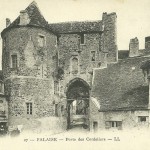
Our postcard shows the old keep or ‘donjon’, once part of a medieval fortress that now houses nothing more ferocious than a loft of lethargic pigeons.
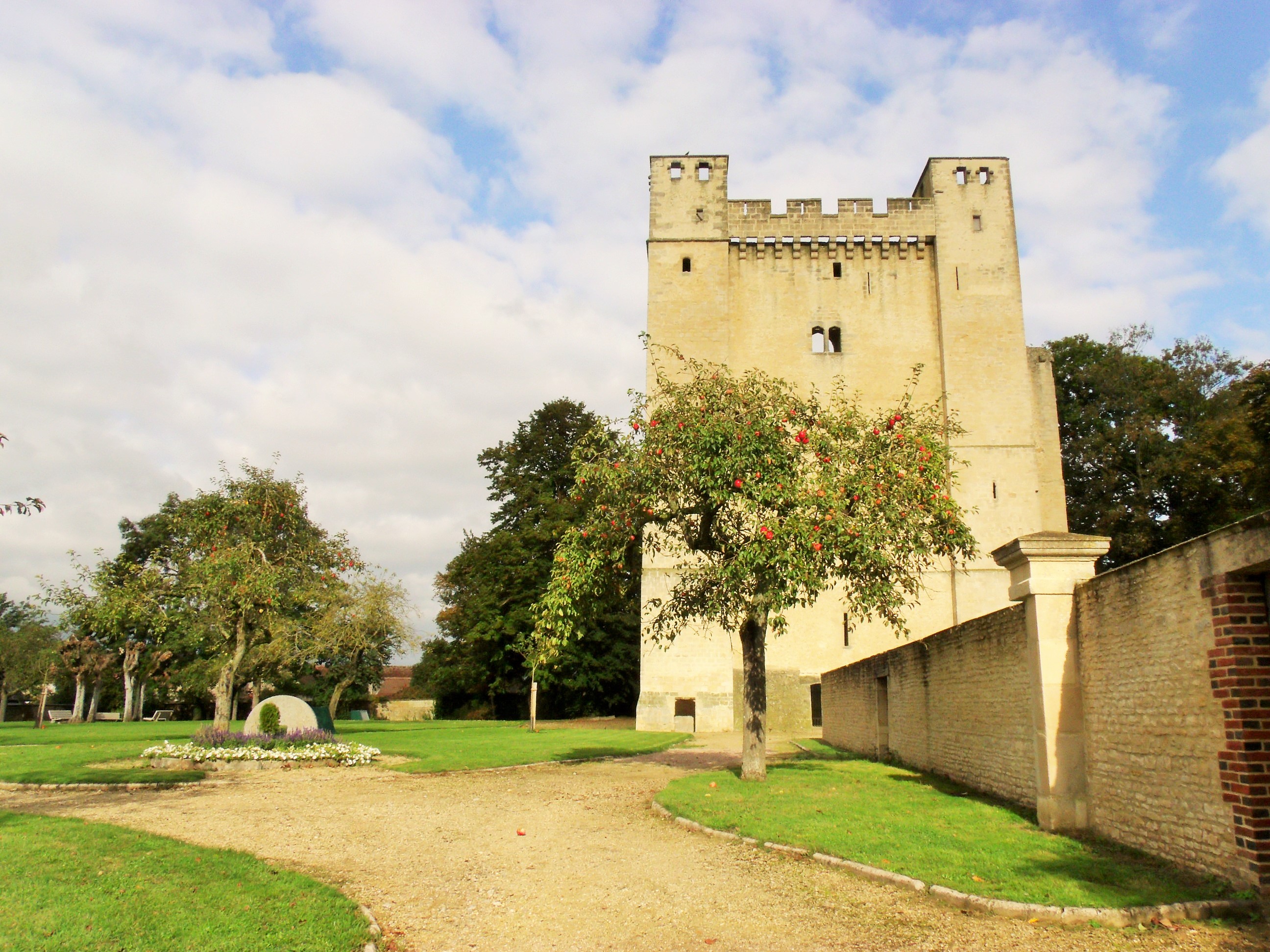 The photo and the postcard do not match as neatly as we usually manage for our ‘then and now’ shots, probably because we had just visited the memorial at Montormel and what we had learned left us shaken.
Making the Falaise Pocket in 1944
Montormel memorial was recommended to us as the best WW2 museum in Normandy. We didn’t question why, but then we didn’t know a lot about WW2 and nothing about the Falaise pocket.
It is up on a hill, reached though some of the prettiest roads in the Orne and on that day there were few visitors. We looked at various exhibits; interested, but not particularly comprehending.
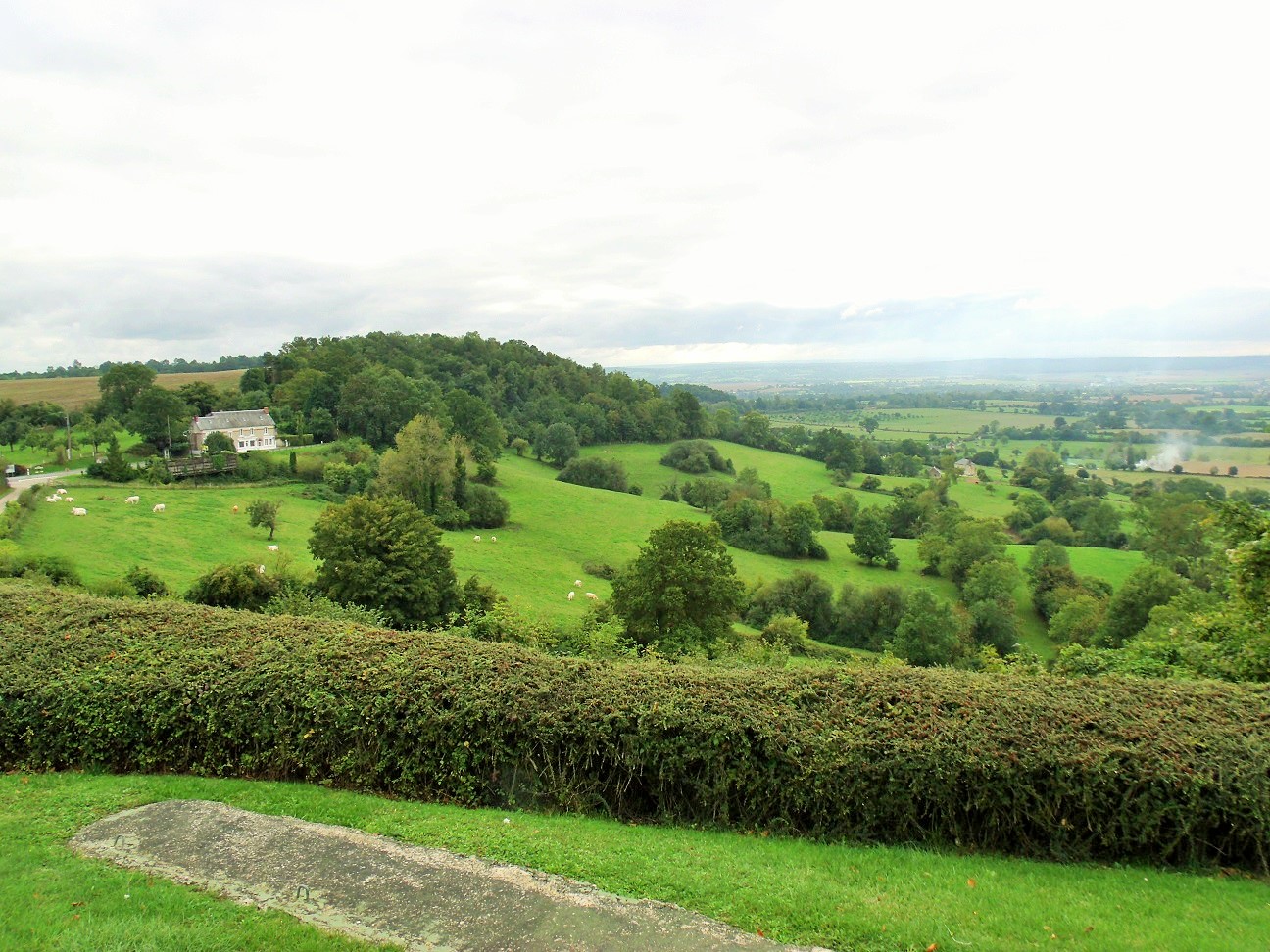
On reaching a large room with a circle of windows overlooking the valley below, a guide kindly set the presentation to English and blinds slowly shut out the view.
Before us on a contoured map inch by inch the story of the Falaise Pocket in August 1944 was revealed.
Closing the Pocket
Arrows of light showed where British, Canadian and Polish forces fought to meet up with the Americans, funnelling the German army into a smaller and smaller area. Fighting was bitter, to say they met ‘resistance’ is an understatement.

All through these battles Allied aircraft carried out ‘strategic bombing’. Mistakes were made. In one story of many we heard how initially the First Canadian Army used yellow smoke to identify their positions while the bombers used yellow to mark targets. It was not clear how many lives were lost.
Enemy circled, a gap to close
The Western Allied forces managed to encircle the Pocket on 19th August trapping thousands. Battleground decisions possibly let a few thousand escape, a few gaps remained.
After clearing the ‘Falaise Pocket’ small town of Chambois of German soldiers, the 8th and 9th Polish battalions head for ‘Hill 262’, Montormel. The area could easily become an escape route for the German Army who were quickly commanded to eliminate the Poles. Outnumbered but determined, the Poles fought under terrible conditions to bravely hold back thousands from escaping.

On 21st August the Pocket was finally sealed with 50,000 German soldiers inside and the battle for Normandy turned forever in the Allies favour.
More than manoeuvres
The presentation concluded. It was interesting, a piece of history we had not known, but told in stark facts we were history voyeurs at another WW2 shrine.
As the blinds drew back our guide joined us. Looking out of the window at miles of Normandy countryside he pointed out key features from the presentation.
Then he said. ‘After the battle for months huge black clouds filled the sky above the Falaise Pocket, do you know what they were?” We suggested clouds of smoke as the valley was cleared of war damage.
Black clouds of death
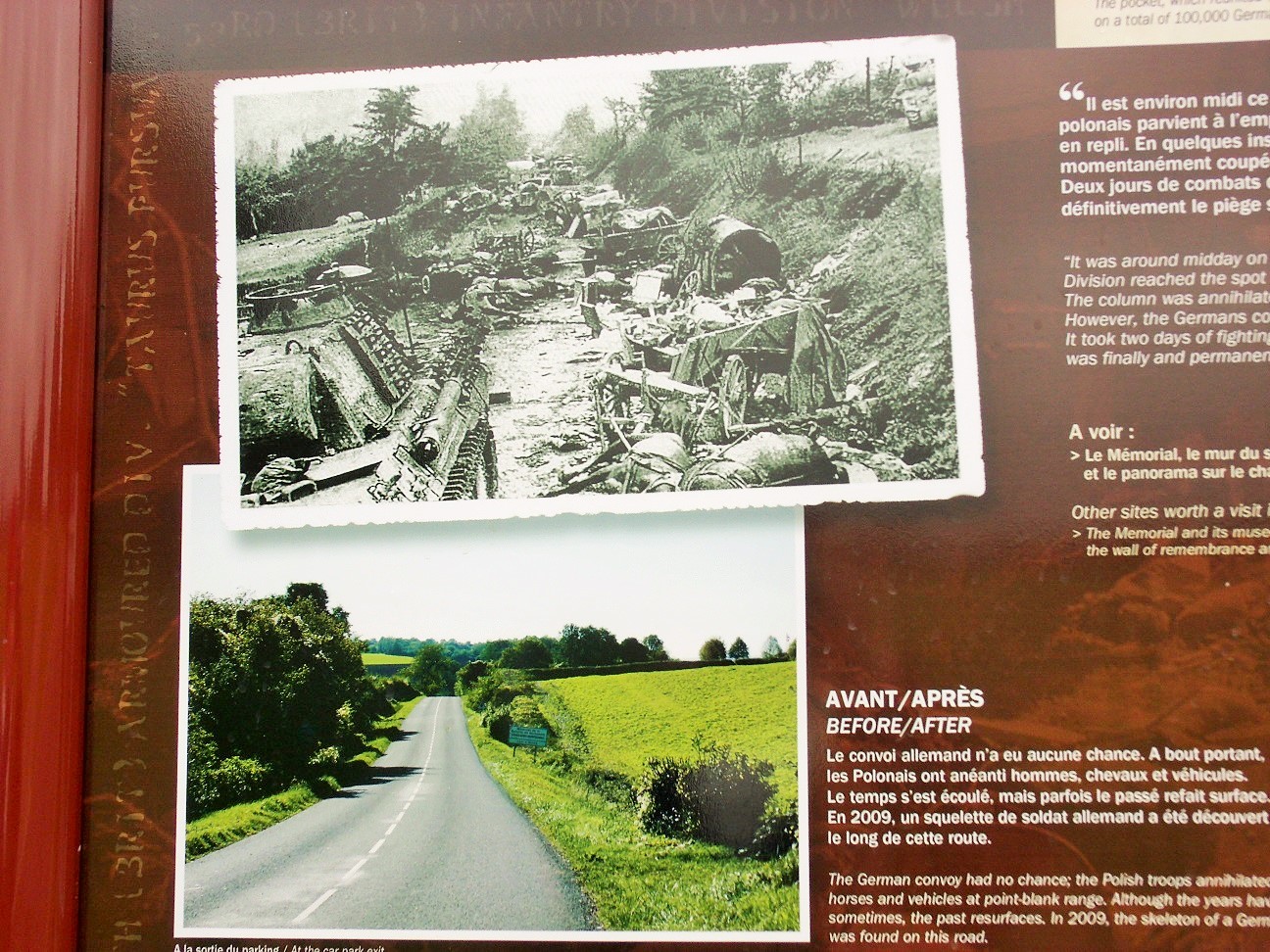
No. “the black clouds were millions of flies that lived on the debris of humanity and animals left after the carnage of battle”.
He drew our attention to photographs around the room then gently explained the human cost of freedom.
The price of freedom
He told us how the valley was scarred with with thousands of dead humans, dead military horses, dead farm animals. Broken machinery and death blocked the roads. As the Allies advanced they had to clamber over mangled machinery and lifeless soldiers, the stench of old corpses making them retch.
We heard how before June 1944 the region had been seen as ‘safe’ by French citizens; hundreds moved from the apparent danger of Paris to the valley, only to find themselves in the middle of a terrible battle.
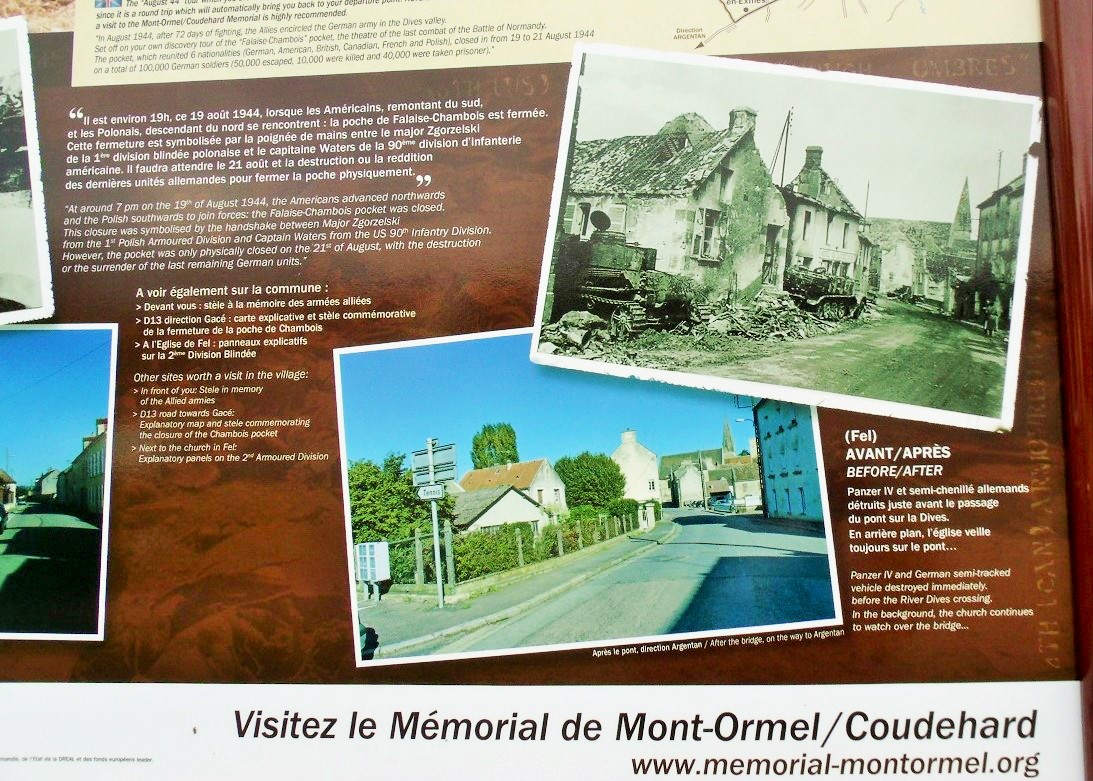
It took more than 20 years to clear away the dead, the broken machinery, the destroyed villages and the horror of the Falaise Pocket. For years the soil was unusable, poisoned.
A terrible history not far from the surface
News items still appear from time to time as a farmer unwittingly unearth a body. They are not always reported. It is still illegal to ‘dig’ for history in this Orne valley.
As we left Montormel and drove down the hill into the valley to Chambois sunlight warmed green leaves, the sky was blue, Normandy at peace. We drove in silence.

One should check out all the cemeteries in the area the only other way to check is go to the French villages and ask em which way the battle was fought then check them out
As always the falaisr gap is a protected site so anyone digging should be prosecuted
My second cousin was killed at Falaise – Brian Berry aged 19 a sniper was responsible I was trying to find a grave – how sad