First published 2 February 2019
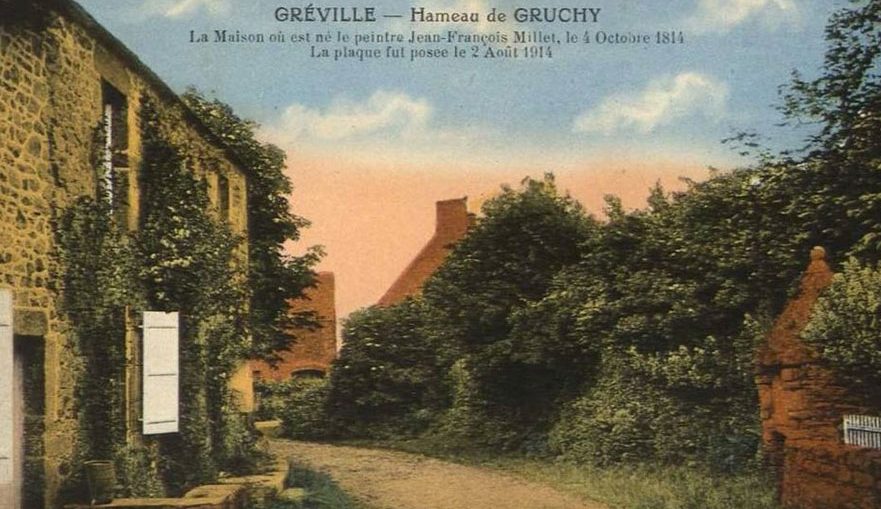
North of Cherbourg, in the wild wide spaces of La Hague, a tiny hamlet nestles in the valley cut by La Pissotière*, a nastily named stream that travels all the way down to the sea.
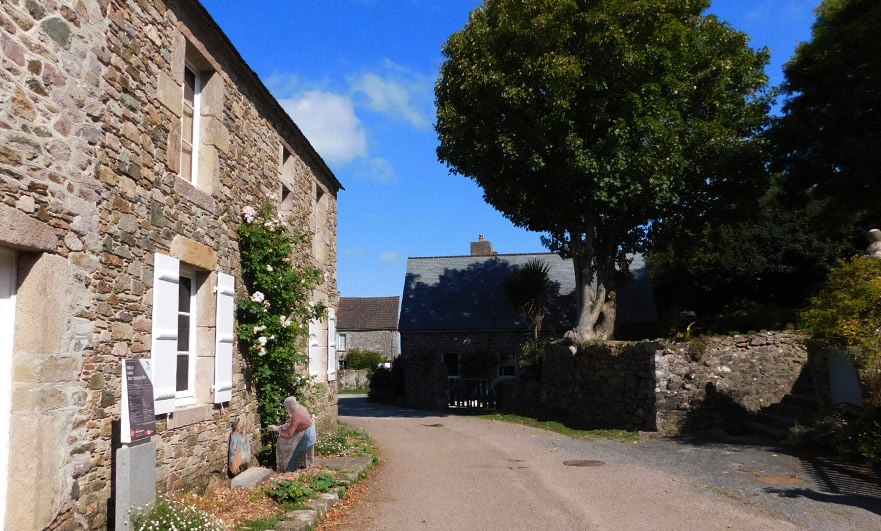
A child born here, long before cars and tarmac roads, lived in a narrow world of small, determined farms edged by sharp granite cliffs and an uncertain sea. To the south the resilient stone church of Greville-Hague offered weekly, chilly, comfort.
There was nothing in the huddle of twenty or so families in Hameau de Gruchy to suggest this place would produce a remarkable artist. No great art hung on the walls, no famous painter sat on these cliff tops and inspired with sketches of crashing waves and paintings of sunsets. Here families rose with the sun, worked the land, cared for their sheep, spun the wool, baked bread, and survived. But Jean-François Millet, second child and first son of a Gruchy farmer, would grow up to create an unforgettable artistic legacy.

A farmer’s child
When Jean was born at Gruchy in October 1815, France was exhausted after decades of battles. Rather than face any more, in April that year the government had chosen to lock up its old hero, Napoleon, on the distant island of Elba. Just 26 years after the revolution, King Louis XVIII was welcomed back onto the throne.
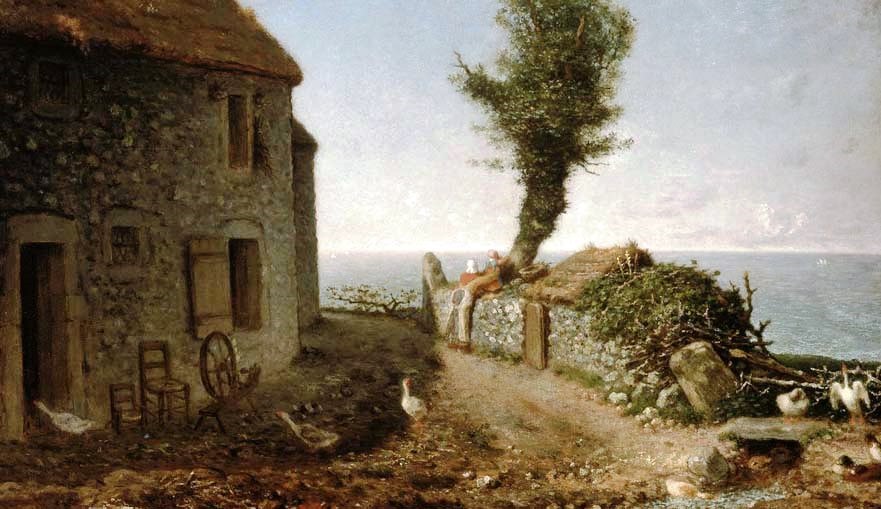
At Gruchy the Millet family was considered fortunate to own 25 acres of land that lay across the only street and out towards the sea. Despite living on this edge of the world, the people of Gruchy were not sailors. Their visits to the sea were limited to harvesting kelp to fertilize their crops, or quietly picking up contraband landed in secret coves out of sight of the customs men.
Jean would be expected to work on the farm from childhood, but there were was a significant differences to the family Millet in Gruchy. Fiercely respectable, they were proud to call uncle a physics teacher, a miller, and a priest who read Greek and Latin. Rumours suggested his mother Aimee’s family were considerably better off before the revolution.

Brave uncle Charles
The great uncle priest, Abbe Charles Millet, had taken his holy orders and said mass at Avranches. During the revolution the Abbe faced arrest and the threat of execution for refusing to give up his faith. He returned to Gruchy and for many dangerous years said mass in private homes, while working as a peasant ploughing the fields. Later when the law allowed religion again, Charles became the priest at Greville-Hague. This intelligent, compassionate man would recognise in his young nephew an unusual talent.
Earliest memory of the artist
For Jean, early life in Gruchy would leave him with profound memories, an awareness of his place in the world unusual perhaps in a child born to the practical life of a Normandy peasant farmer. He would later recall to his friend Alfred Sensier a comforting memory from his cot:
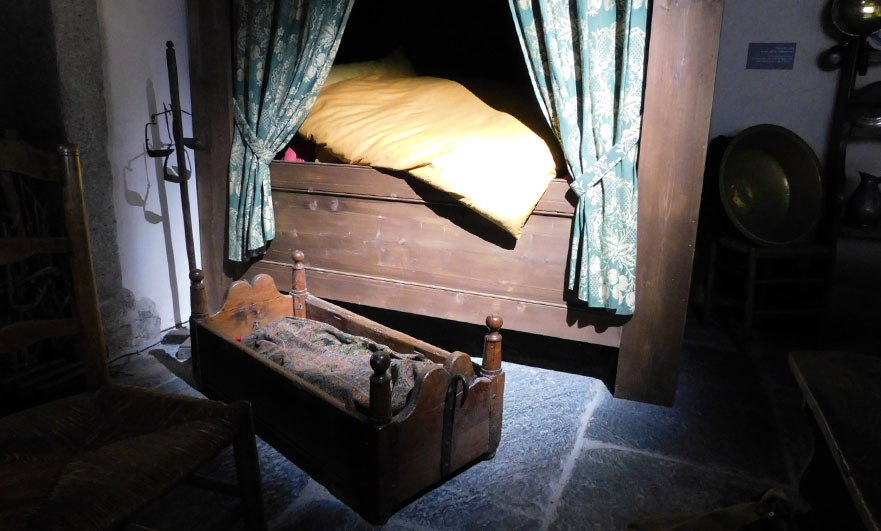
“I remember waking up one morning in my little bed hearing voices from people talking … Among the voices there was a kind of snoring that interrupted from time to time. It was the sound of a spinning wheel and the voices were those of women who were spinning and carding wool. The dust of the room was dancing in a shaft of sunlight entering through the narrow and slightly high window, the only one in this room…There was in one of the corner of the room a large bed covered with a blanket of red and brown stripes, falling all the way to the ground. There is also a large brown-coloured cabinet leaning against the wall between the foot of the bed and the wall where the window was. It all comes back to me like a vague dream, very vague.”
Youthful admiration
Another early memory took place in Greville-Hague. During the wars the Greville-Hague church bells had been melted down to make guns before Jean was born. At last they were to be replaced. He recalled:
“My mother was curious to see the new bells that were in the church waiting to be baptized before going up in the tower, and she took me with her. We were accompanied by a girl named Julie Lecacheux, whom I have known all of my life.
“I remember how I was shocked to be in a place as dreadfully vast as the church, which seemed to me more immense than a barn, and also the beauty of the large windows in lead lozenges.”
“We saw the three bells, which were on the ground, and I thought huge because they were bigger than me. Then, (which probably has helped to fix this memory in my mind), Julie Lecacheux, who held in her hand a very large key, probably that of the church, started to hit with it one of the biggest bells, which had made a great sound, which filled me with admiration. I never forgot that key crash onto the bell.”
Shipwrecks!
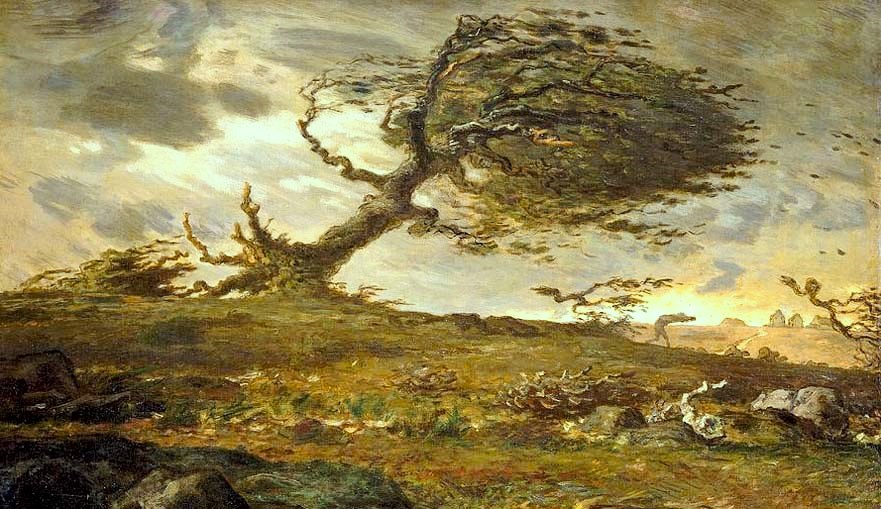
Not all of Jean’s memories were gentle. One All Saints Day as a storm raged across La Hague, an old sailor burst into the church at Greville, calling for help:
“It was All Saints Day. In the morning we had seen that the sea was big, and it was said that there would probably be misfortunes. The whole parish was at the church. In the middle of the mass, we saw a man from the village arrive: he was dripping with water; he was an old sailor, well known for his great courage. As soon as he entered, he began to say that he was coming back from the shore and that he had seen several ships, which, driven by a terrible wind, were being forced towards the coast.
“We must help them,” he said.
Some fifty men presented themselves at once, and, without speaking, followed the old sailor. We arrived at the beach down our cliffs, and there we saw a dreadful spectacle. There were several ships, one after the other, at a distance of thirty or forty fathoms, which made their way in spite of themselves with incalculable force on our rocks.
“Our men put three canoes in the sea, but one filled with water and sank; another was turned upside down by a wave, and the third threw herself on the rocks. Fortunately, no one perished.
“During this time the ships were always advancing and were only a few strokes of our black rocks. The first, with no masts, arrived like a great mass, and everyone on the beach saw it approaching; no one dared to say a word. It seemed to me, as a child, I was watching death having fun playing with a handful of men, to crush or engulf them.
“An immense wave rose like a furious mountain, enveloped the ship and brought it close to us, then another wave, still more immense, threw it on a rock at the water’s edge. There was a terrible crack; there was another, and the ship was instantly invaded by the waters. The sea was covered with debris of all kinds, boards, mats and poor people drowning. Many swam and disappeared.
“Our men threw themselves into the sea to help them, and the old sailor at their head made great efforts to save the castaways. Several were brought back, but they were either drowned or broken by the rocks.
“The sea rejected many hundreds of them, and with them goods and food. For many days afterwards they pulled these sad wrecks out of the sea, and they were deposited, all spoiled by sea salt, in the cellars of the houses.
“A second ship was approaching, it was de-masted, everyone was on the deck, which was positively full, and we all saw them on their knees, and a man dressed in black appeared to bless them. A wave larger than our cliffs carried it towards us, and we seemed to hear a crash like that of the first ship, but it held fast. The waves swept over without moving it. The ship was as if petrified on the sea….”
English sailors saved
A boat was put out to rescue the sailors.
“In a moment our boat was filled with people. A ship’s boat was put to sea, boards and teams were thrown, and in half an hour everyone was on the ground. This ship had been saved by a very rare chance: her bow was stuck between two rocks. The wave that had thrown it onto the reefs had thus preserved it as if by a miracle.
“This ship was English, and the man who blessed his companions was a bishop. They were taken to the village, and soon after to Cherbourg.
“A third ship was thrown into the waves and broken into fragments. No one could be saved, and all the corpses of these unfortunates were thrown onto the sand.
“There was like this a fourth, a fifth, and a sixth ship, broken on the rocks. The storm was furious. The wind was so violent that it was impossible to move against it. The wind lifted covers from the roofs and carried away the thatch. It swirled so roughly it killed the birds, even the seagulls who are accustomed to storms.
“We spent the night securing our houses: some covered their roofs with large stones, others carried ladders and saplings and lay them over roofs to protect them. Trees bent to the ground and creaked and broke. All the fields were littered with branches and leaves. It was a terrible scourge.”
“Broken the sailors like glass”
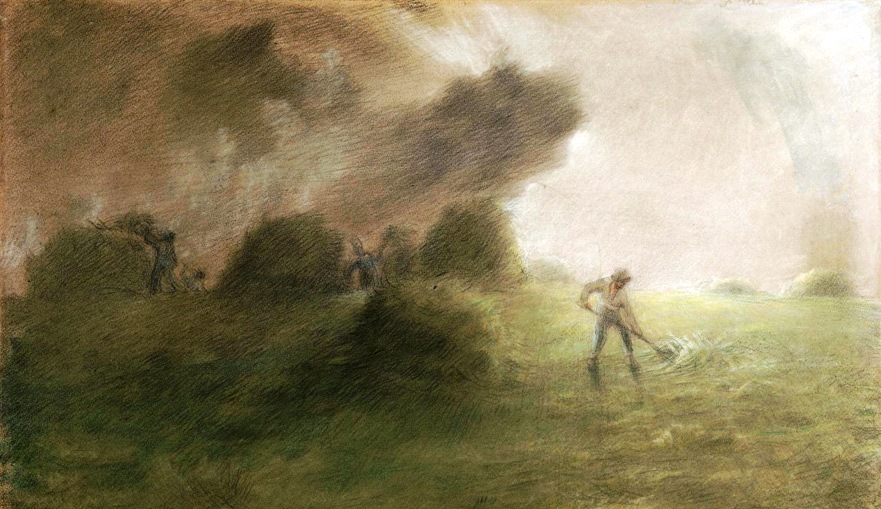
“The next day, the day of the dead, the men of the parish returned to the beach that was covered with dead and debris; they were carried away and stored at the foot of the rocks. We saw several more ships all broken on our shores. It was a desolation, an end of the world.
“The rocks had broken the sailors like glass. Passing near a recess, I saw a great sail that covered a heap of goods. I began to lift the sail and saw a mountain of corpses. I became so frightened that I ran to our house, where my mother and grandmother were praying for the shipwrecked.
“On the third day a ship came back. That one, we was able to save a small part of the crew, a dozen of them. But those men, who were fetched from the rocks, they were mutilated or bruised. They were taken to Gruchy, treated well for more than a month, and taken to Cherbourg. But the poor wretches were not quit of the sea. They were put on a ship that was going to Le Havre, a sea-raid took them, and they all perished.
“As for the dead, all the horses were busy for a week carrying them to the cemetery. They were buried in un-blessed earth; they said they were not good Christians.
“A few days later, I began to pick up from the sand a small wooden sculpture that certainly came from one of the ships lost on our shores. When my mother saw it, she scolded me very loudly, crossed herself and ordered me to tell her where I had found it and to ask pardon of the good Lord for my theft, which I did immediately, very ashamed of my action.
“Since then, I have seen many storms in my country, but none have left me with such an image of destruction, the smallness of man and the power of the waters.”

Grave robbers
All thought his childhood, Jean was educated and encouraged by his uncle, while also working on the land with his family. Sadly his uncle would not live to see his protégé succeed. Talking of his death, Jean told one of strangest tale of all from his childhood.
“On the day my great-uncle was buried, I heard spoke in a very mysterious way how it would be necessary to bury him. We had to put on the coffin, on either the side of the head, some big stones, and over it all two bales of hay, because, it was said, this is what gives them the most trouble. Their tool gets entangled first in the hay, and then breaks against the stones, which prevents them to be able to hook the head and pull the body out of the pit.
“What that mysterious language meant, I now understand.
“Still, from the day of the burial, many friends of my uncle, who were made to drink hot cider, spent the nights, armed with rifles and tools of any kind, and watched over the grave where my brother-uncle had just been buried.. This guard lasted, I believe, about a month. After this time it was said there is no danger.
“Why all these precautions? It was said that there were people who dig up the dead for the doctor; they always knew when someone died and quickly came at night to take away the body.”
Challenges ahead: the artist
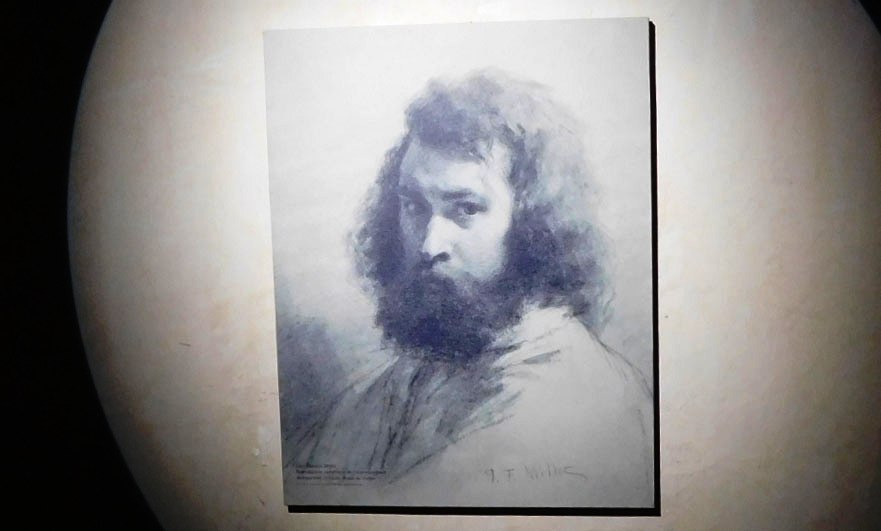
By 1833, eighteen year old Jean Millet’s artistic ability could not be denied. Jean’s family agreed he could study with the Cherbourg portrait painter Paul Dumouchel. In two years he was studying full time with the artist Lucien-Théophile Langlois. Thanks to his talent and a stipend from Langlois (and others) by 1837 Jean was studying in Paris.
Jean-François Millet would never forget his childhood in Gruchy, the hardworking peasants he grew up with and their love of family, God, and the land.
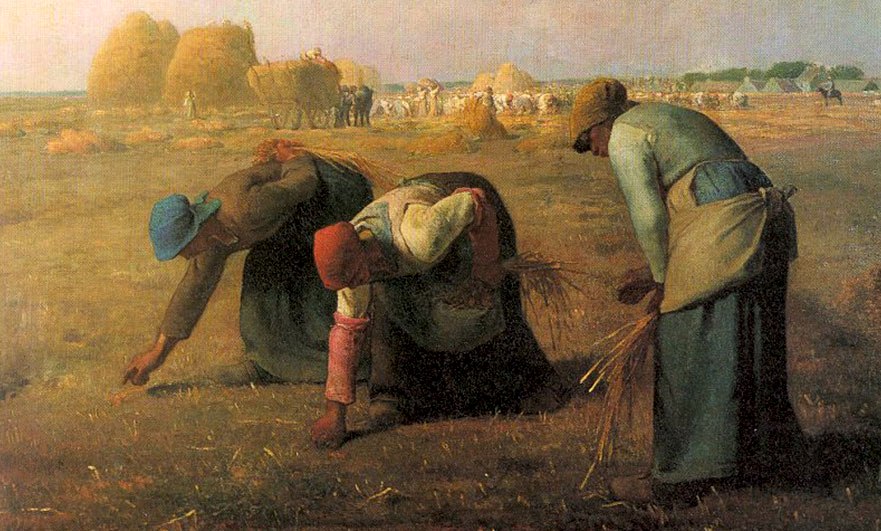
At first his work was seen as harshly realistic, and his paintings of lowly peasants were reviled. But in time these powerful images of honest toil would become appreciated as emblems of France, inspiring artists Seurat, Van Gogh and Salvador Dali.
From humble beginnings, Jean-François Millet died a wealthy man, father to nine children and creator of some of France’s most loved paintings.
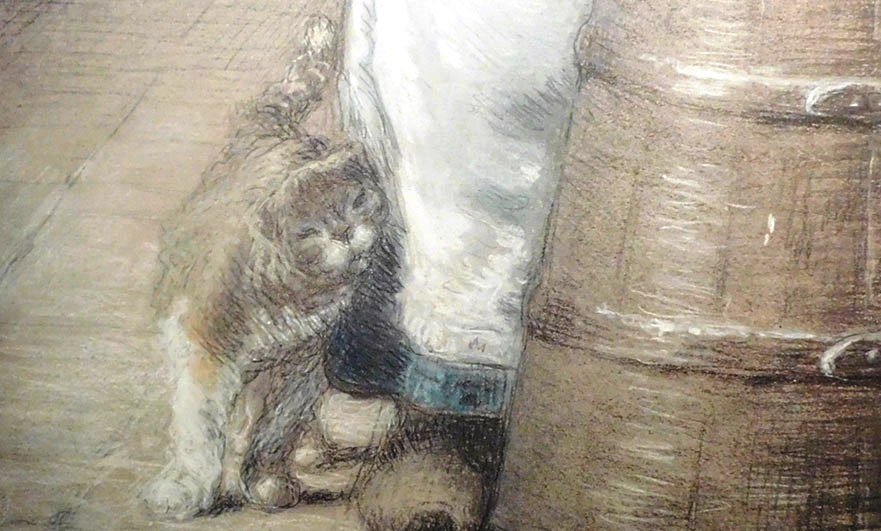

References include:
The life and work of Jean-Francois Millet by Alfred Sensier, (Fr)
Visit the museum website
Oh and La Pissotière* translates as urinal
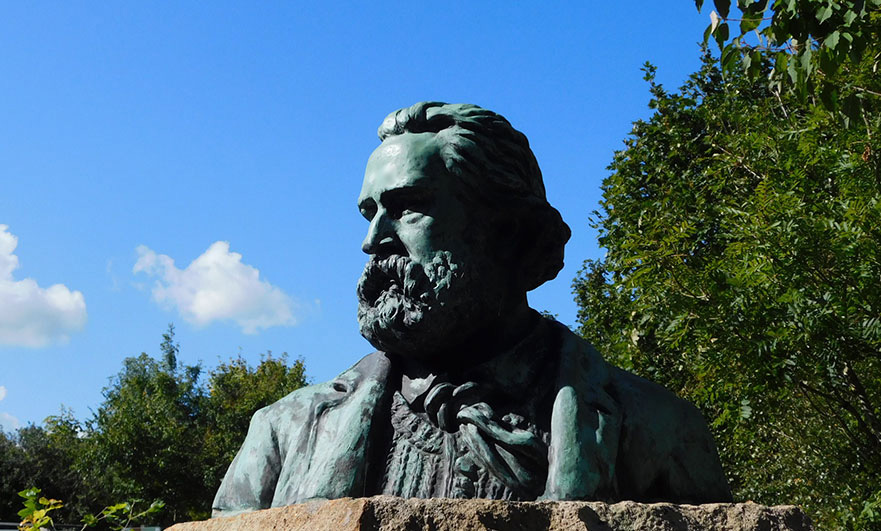


Not sure if this website is still around. My Name is Christian, came to America in 1951 from Grandville France, i was 3 years old. I like to thank who ever posted the story of Jean François Millet story of his life was very interesting to read, I went back to visit my family with my wife in 1985, we stayed at my aunt Louise place next door to my Grandmother Celestine Francois Brice, and her mother my Great Grandmother name is Celestine Francoise Millet. my great Grandmother was telling me when i went to visit that Jeanfrancois Millet is my uncle, and my grandmother lived just around the corner that i walked to go see la Croix de Millet in St Pair Sure Mare. I have been trying to figure out. Was it my uncle Jean François millet brothers had a daughter that is my great grandmother… i hope in the near future i like to go back to Normandy France and Visit Places where my uncle lived, I been doing some research and found his home where he lived with his wife in Barbizon France. I know i may not get any response, but it does not hurt to take a chance. thanks, take care Chris