

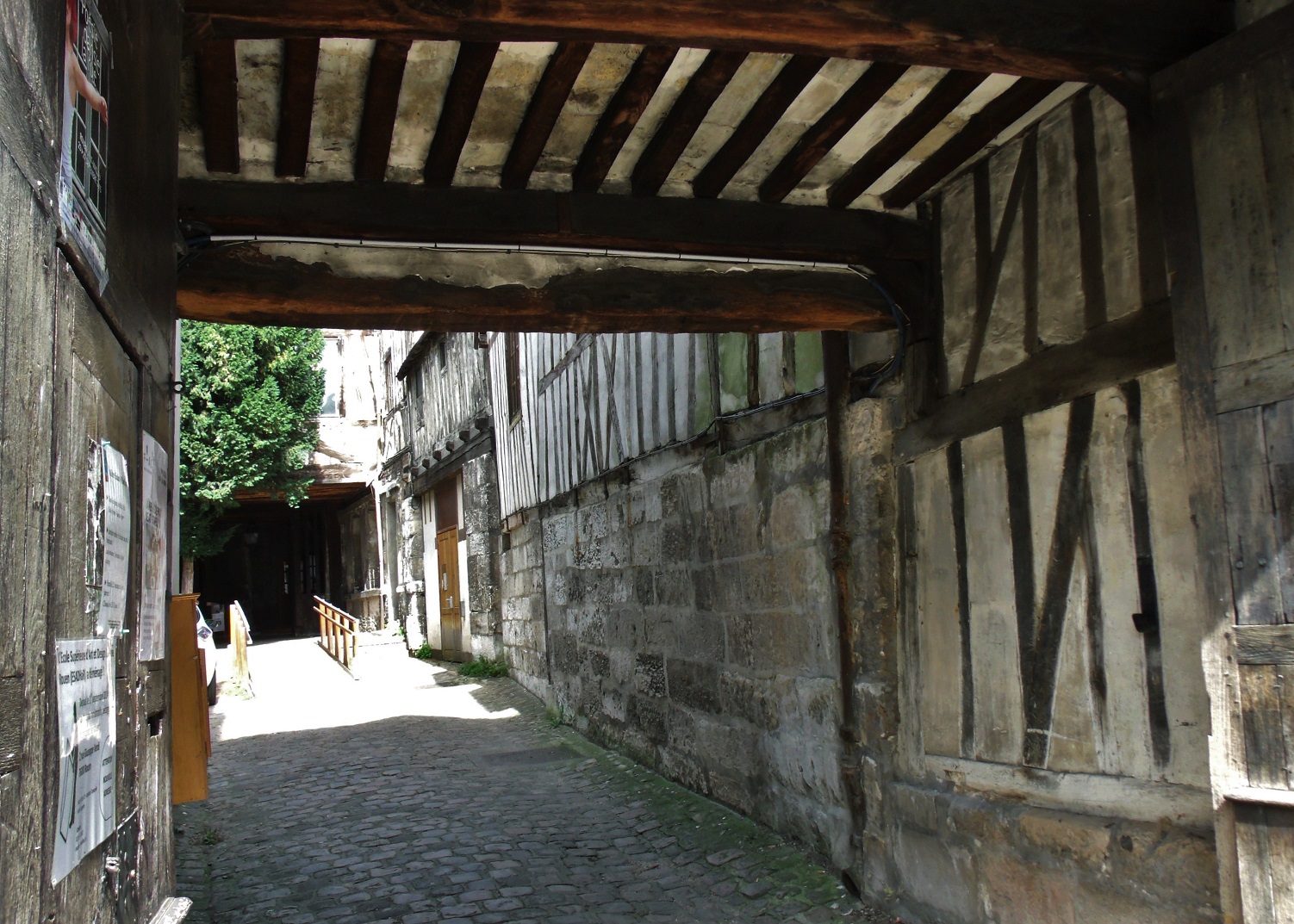
If you walk along Rue Martainville past Saint-Maclou church in Rouen, keep a sharp eye out for the quietly marked entrance to L’ aître Saint-Maclou.
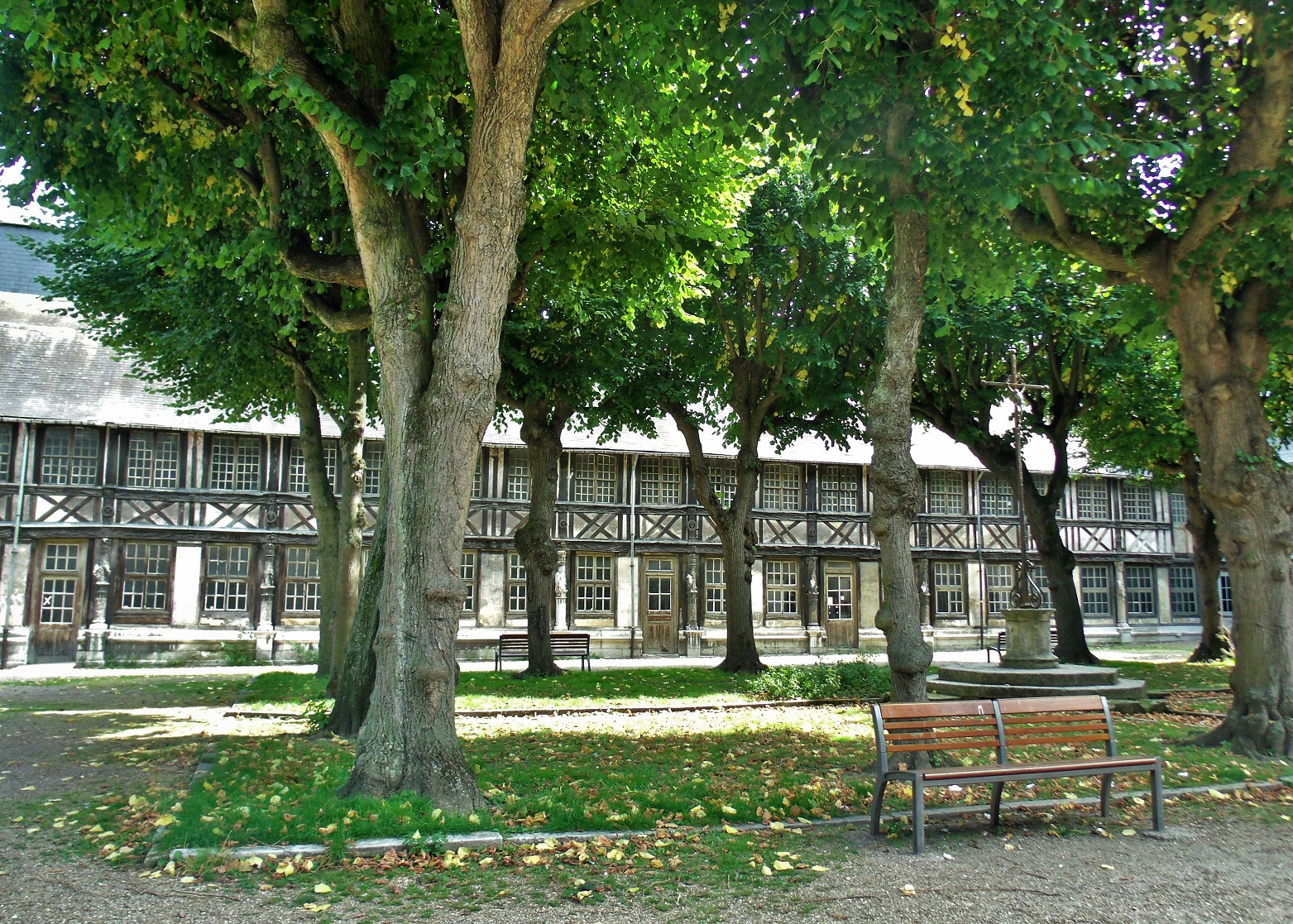
Under a covered entrance way, along an ancient alley and up a small ramp, turn right and you are in a very strange courtyard.
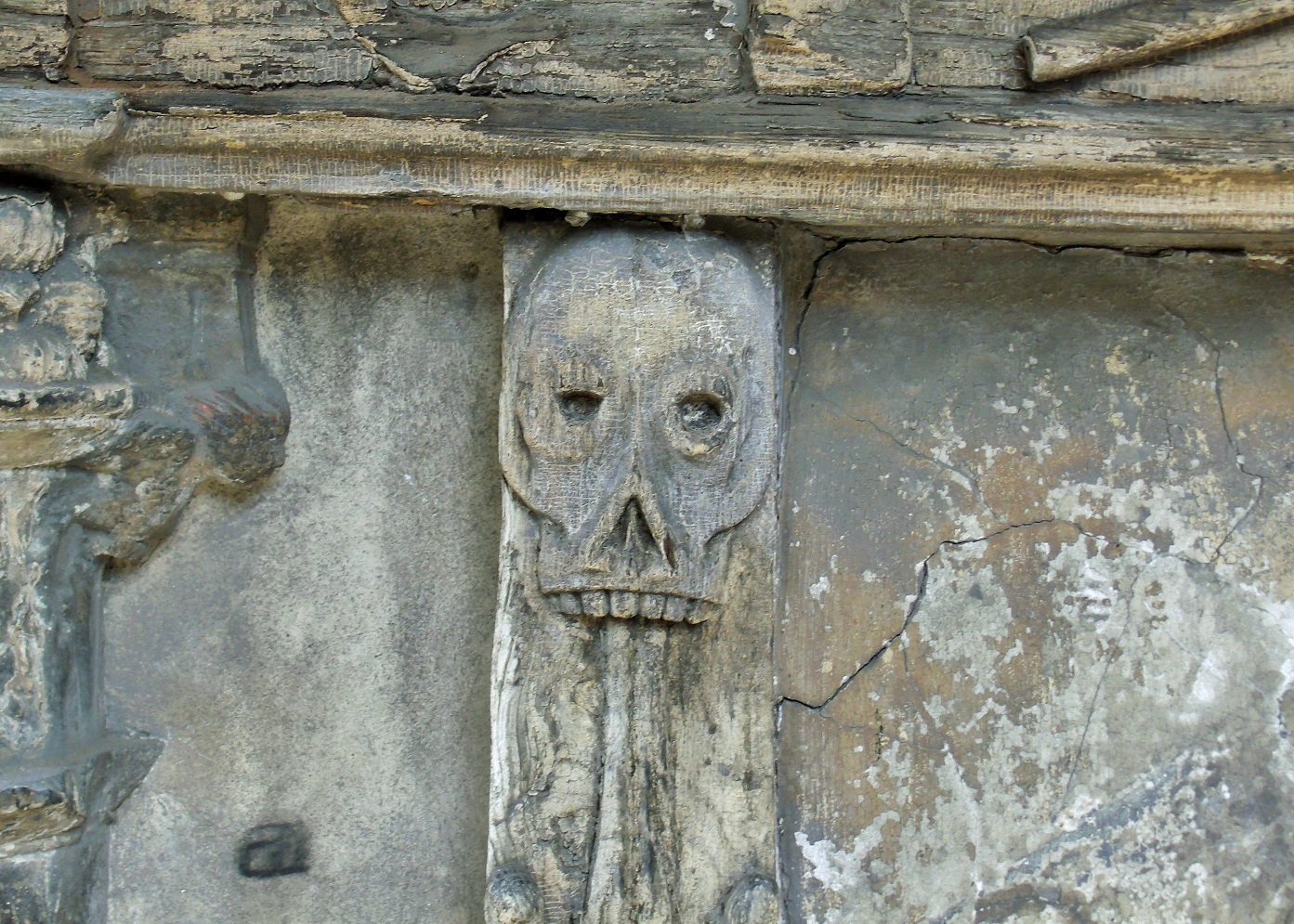
Lining up our photo match at first we did not notice the carvings. Then we saw why L’ aître Saint-Maclou would make the perfect pirate’s club house. Every wooden beam is carved with skulls, bones, swords and sleeping faces of the dead. Axes crossed with shovels look ready to bury treasure.

Plague devastates Rouen
But the only treasure here would be the bones of the dead. This peaceful square has twice been used as a plague pit.
In 1348 the Black Death killed around three quarters of Saint-Maclou’s citizens. A new cemetery was needed so Maclou was dug and quickly filled with victims of the plague, rich and poor side by side.
Nearly two hundred years later the Black Death returned.

Awaiting resurrection
As plague gripped Rouen the long dead were dug up to make room for the new. But Christian bones could not be destroyed as the medieval church preached bodily resurrection; on the ‘final day’, as trumpets sound, all the dead around the world will rise up from their graves to be judged. If you didn’t have your bones you couldn’t rise up with the rest for a chance in heaven.
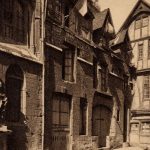
Three sides of the half-timbered building you see today date back to that time. Built between 1526 and 1533 the ossuary, a charnel house, was built above a cloistered corridor around the cemetery.

Two thirds of Saint-Maclou’s residents died of the plague and were buried in the newly cleared pit while the old exhumed bones were placed in the rooms above of the cloister.
A grim education
The fourth side of the square was completed with père Robert Duchesne’s 1651 legacy to create a school for poor boys. The school was taken over by Christian Brothers but the bones remained until 1779 when urban burial sites were banned in France.
In 1780 the lifeless tenants of Saint-Maclou were moved to the Mont Gargan cemetery on Côte Sainte-Catherine. [Archaeological update March 2016 – see end of post]
Except for a few years during the Revoltion, the Christian Brothers school remained on site until 1907. Then a girls boarding school was opened here in 1911 but it was not a success. By 1927 the L’ aître Saint-Maclou was abandoned, in danger of falling down through neglect. So the City of Rouen took it over. Restored, the buildings became temporary host to the School of Fine Arts when their own building, Halle aux Toiles, was destroyed by fire in 1940. The school left for more practical if less romantic accommodation in 2014.

New life for L’ aître Saint-Maclou
Now the galleries and offices are empty and the courtyard, excepting a few whispering tourists, is quiet. For how long we do not know. Rouen has plans to ensure the future of L’ aître Saint-Maclou that could bring new life to this medieval marvel. A wonderful range of cultural events took place over the summer and there is talk of encouraging local artisans to use the studio spaces.
One last surprise
As you leave the courtyard look for a small window to your left. Behind dusty glass is an unpleasant reminder of old superstitions discovered during renovations.
A mummified cat, held up by string, appears to leap into the dark. Under it’s dried-out feet lay the sad remains of a mouse. Long ago a black cat was shut into these walls, alive, to ward off the devil.
A tragically fitting finale to this macabre piece of history.
- More about the history of the ossuary (English, pdf)

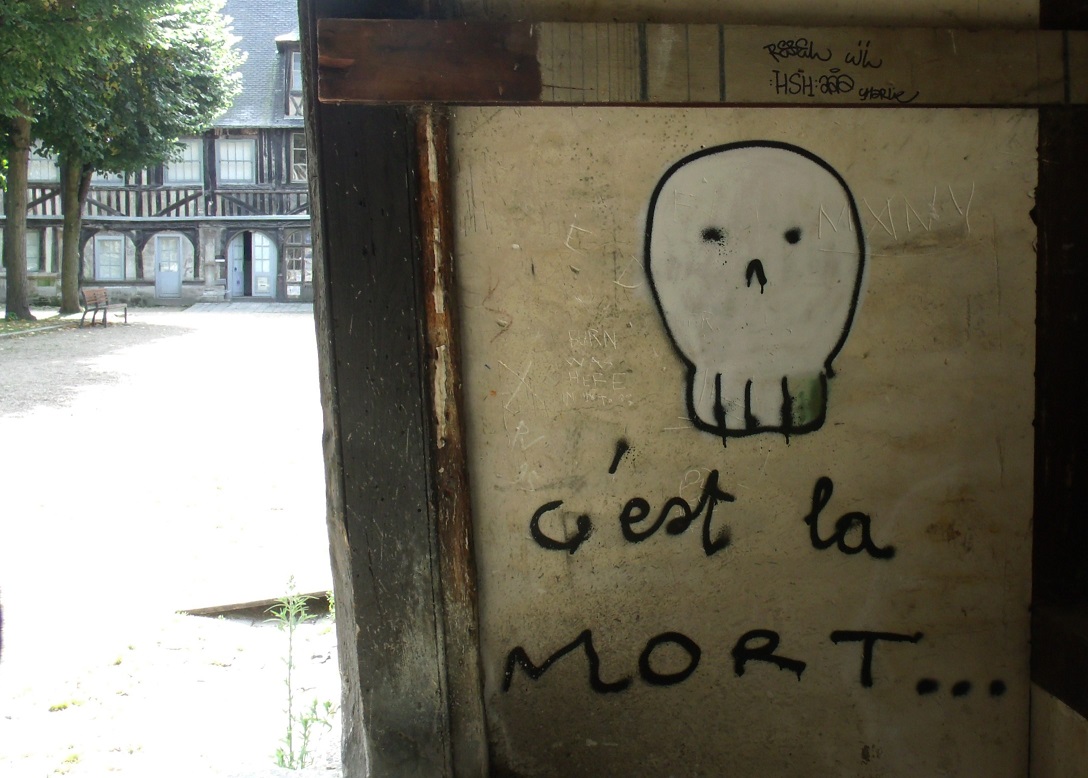
A parting gift from the art students? L’ aître Saint-Maclou in Rouen
About and visiting information
Can’t visit just now?
For a 360 view, click here to explore from home.
UPDATE
March 2016 – In 2016 prior to renovation the archaeologists are invited to investigate. They soon discover under the central courtyard many bones and complete skeletons. Not everyone made it up to the Mont Gargan cemetery on Côte Sainte-Catherine.


Thank you very much for this article. I was in Rouen in 2018 and they were still unearthing the remaining bones from the central courtyard. I remember stacks of skeletons with lovely teeth, leading me to believe many were young and healthy when they died. When Covid hit, I remembered this tragic site and isolated early. Having seen first-hand what a pandemic could do, I had no appetite for risk. Thanks to your article, I now have more than a sad memory of this site — I now have a much better understanding of its history. Thanks again — much appreciated.